




What's Happening?
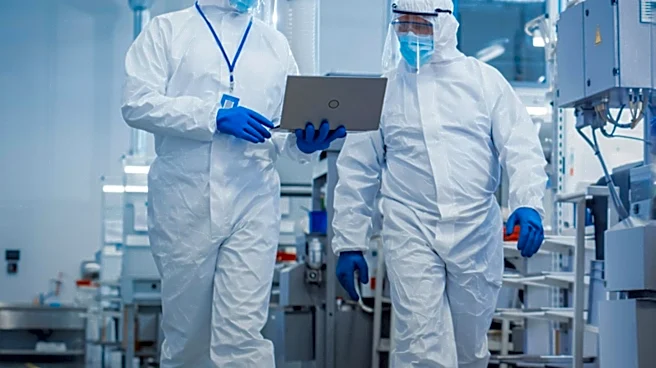
Food technology companies are leveraging biology to fundamentally alter food production, encompassing methods like growing animal cells for meat, cultivating plant cells, and using fermentation to create ingredients such as colors, fats, and oils. These
biomanufacturing approaches aim to address supply-chain vulnerabilities, reduce reliance on traditional agriculture, and produce ingredients that are difficult or expensive to source. However, the transition from scientific possibility to commercial reality is proving complex. Companies face significant challenges in achieving competitive costs, scaling manufacturing processes, navigating regulatory approvals, and ensuring consumer and industry acceptance. For instance, some companies have developed products to industrial scale and profitability but are awaiting regulatory approval in the U.S. before they can sell. The pace of growth for underlying biology, particularly slower-growing microorganisms, also presents a challenge for consistent and economic production.
Why It's Important?
The success or failure of biomanufacturing in the U.S. food sector has profound implications for national food security, environmental sustainability, and economic development. If these technologies can overcome their current hurdles, they could significantly reduce the environmental footprint of food production by lessening the need for livestock farming and extensive agricultural land. This could also mitigate the impact of climate change on food supply chains, offering more resilient and localized production methods. Economically, a thriving biomanufacturing industry could create new jobs, foster innovation, and establish the U.S. as a leader in advanced food technologies. Conversely, if these companies fail to scale or gain market acceptance, it could lead to substantial financial losses for investors and a missed opportunity to address critical food system challenges. The ability to produce 'better than nature' ingredients with improved functionality and consistency could also reshape consumer expectations and product development in the food industry.
What's Next?
The biomanufacturing sector is currently undergoing a period of recalibration, with companies refocusing on cost reduction, product differentiation, and strategic partnerships. Regulatory approval remains a critical next step for many, particularly in the U.S., to move products from development to market. Companies are also exploring partnerships with established food manufacturers to leverage existing infrastructure and distribution networks, rather than building everything in-house. The industry will need to demonstrate that its products can meet consumer expectations for taste, quality, and price, moving beyond the novelty factor. Future developments will likely involve continued investment in research and development to improve efficiency and scalability, as well as ongoing dialogue with regulatory bodies to streamline approval processes. The ultimate success will depend on whether biomanufacturing can deliver products that the food industry needs, at a commercially viable price and scale.
Beyond the Headlines
Beyond the immediate commercial challenges, biomanufacturing raises deeper questions about the definition of 'food' and consumer perceptions of technologically produced sustenance. There are ethical considerations surrounding the genetic engineering of microorganisms and cells, as well as potential long-term health impacts that require thorough investigation. The shift towards biomanufacturing could also disrupt traditional agricultural communities and economies, necessitating policies to support transitions and ensure equitable access to new food technologies. Furthermore, the intellectual property landscape for these novel food production methods is rapidly evolving, potentially leading to complex legal battles over patents and market dominance. The integration of these technologies into the mainstream food supply will require not only scientific and economic viability but also a significant cultural shift in how consumers view and trust their food sources.