






What's Happening?
PepsiCo, a major player in the snack and beverage industry, recently released its third-quarter results, indicating a 5.6% increase in net revenue to approximately $25.3 billion. Despite this revenue growth and improved earnings compared to the previous
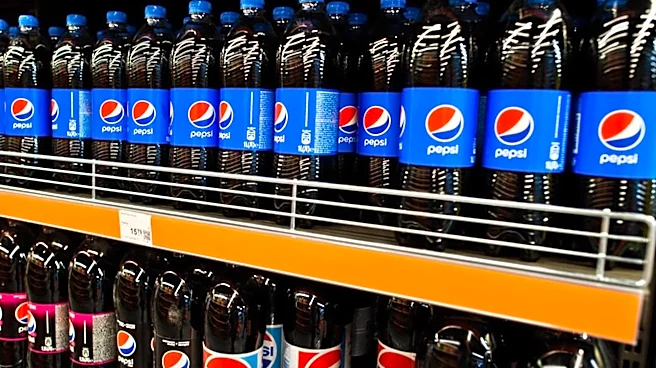
year, the company experienced a softer core margin. Following the announcement, PepsiCo updated its full-year 2026 guidance. The stock saw an upward movement after these results were made public. PepsiCo's operations are divided into two main franchises: the food side, which includes Frito-Lay North America (Lay's, Doritos, Cheetos, Tostitos) and Quaker Foods North America (oatmeal, granola bars), and the beverage side, encompassing PepsiCo Beverages North America (Pepsi, Mountain Dew, Gatorade, Tropicana, Aquafina, Bubly) and international beverage and snack businesses. The company has been navigating softer volumes in some North American categories due to consumers reacting to higher shelf prices, leading management to focus on balancing price, volume, and affordability through promotions and new pack sizes.
Why It's Important?
PepsiCo's performance and strategic adjustments are significant for the U.S. consumer staples market. The softer core margin, despite revenue growth, highlights the ongoing challenge for food and beverage companies to maintain profitability amidst consumer pushback on increased prices. This trend could influence pricing strategies across the industry, potentially leading other companies to adopt similar approaches of focused promotions and varied pack sizes to attract value-seeking shoppers. The company's substantial operating cash flow, which is allocated to capital spending, acquisitions, dividends, and share buybacks, underscores its financial stability and commitment to shareholder returns. PepsiCo's consistent dividend increases for over five decades position it as a 'dividend aristocrat,' making it an attractive investment for those seeking stable income. Its competition with rivals like Coca-Cola, Mondelez, and Hershey in both beverage and snack sectors means its strategic decisions have ripple effects throughout the broader consumer goods landscape, impacting product availability, pricing, and innovation.
What's Next?
Looking ahead, stakeholders will be closely monitoring PepsiCo's future earnings calls, cash flow statements, and dividend declarations. The company's strategy to balance price, volume, and affordability will be crucial in addressing consumer sensitivity to higher prices and maintaining market share. Any news regarding portfolio changes or cost-saving programs will also be significant. The broader macro picture for American consumer staples, including inflation trends, employment rates, and wage growth, will continue to influence household spending on discretionary items like snacks and soft drinks. PepsiCo's ability to innovate and adapt to evolving consumer tastes, such as the demand for healthier options alongside indulgent treats, will be key to its sustained growth. Challenges such as volume softness in North American markets, margin pressure from costs and promotions, and potential product quality issues will remain critical areas for the company to manage.
Beyond the Headlines
The dynamics observed at PepsiCo reflect broader shifts in consumer behavior and the economic landscape. The pushback from consumers on higher shelf prices indicates a growing demand for affordability and value, which could lead to a more competitive pricing environment across the consumer goods sector. This trend might also accelerate the growth of private label brands and smaller, more agile competitors offering lower-priced alternatives. Furthermore, the evolving consumer taste, with demands for both healthier options and indulgent treats, presents a complex challenge for large corporations like PepsiCo. This necessitates continuous innovation in product development and marketing to cater to diverse preferences. The company's strong credit rating and consistent dividend record highlight the resilience of established consumer staples firms, even in fluctuating economic conditions, making them a benchmark for financial stability in the U.S. market. The ongoing scrutiny of product quality and recall events across the food industry also emphasizes the increasing importance of supply chain integrity and consumer trust.