







What's Happening?
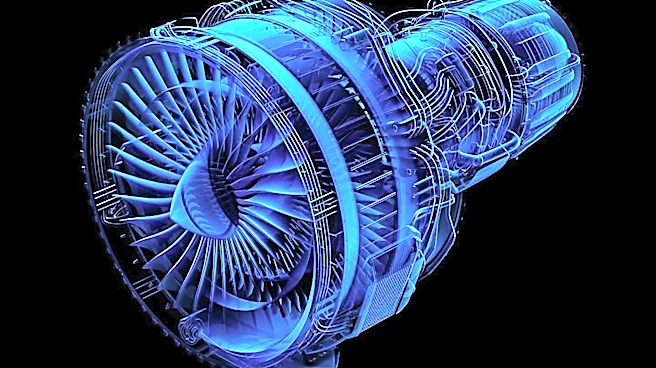
The Federal Aviation Administration (FAA) and the European Union Aviation Safety Agency (EASA) have certified a new high-pressure turbine (HPT) durability kit for CFM International's LEAP-1B engine. This certification is expected to significantly extend
the engine's time on wing, particularly in challenging environments such as the Middle East and India. CFM International is set to begin full production of the hardware by early 2027. Additionally, the company has achieved initial certification for the LEAP-1B reverse bleed system (RBS), a cooling mechanism aimed at reducing the frequency of on-wing fuel nozzle replacements. These advancements are designed to align on-wing maintenance needs with those of the previous generation CFM56 engines. According to CFM President and CEO Gaël Méheust, these systems will not only extend the time between shop visits but also lessen the maintenance burden for customers operating in severe conditions.
Why It's Important?
The certification of the LEAP-1B HPT durability kit and the reverse bleed system represents a significant advancement in aviation technology, promising to enhance the operational efficiency and reliability of aircraft engines. This development is particularly crucial for airlines operating in harsh environments, where engine maintenance can be more frequent and costly. By extending the time on wing and reducing maintenance needs, airlines can achieve lower operational costs and improved aircraft availability. This is a strategic move by CFM International to maintain its competitive edge in the aviation industry, especially as the demand for more efficient and reliable engines continues to grow. The success of the LEAP engine program, with over 10,000 engines delivered in just a decade, underscores the importance of these innovations in meeting the evolving needs of the aviation sector.
What's Next?
CFM International is preparing for the full-scale production of the LEAP-1B HPT durability kit, with a target to commence by early 2027. As the company continues to enhance its engine offerings, it is likely to focus on further innovations that can improve engine performance and reduce operational costs for airlines. The aviation industry will be closely monitoring the implementation of these new systems and their impact on engine maintenance and efficiency. Airlines operating in regions with extreme environmental conditions may particularly benefit from these advancements, potentially influencing their future fleet decisions. Additionally, as CFM marks the 10th anniversary of the LEAP-1A's entry into service, the company is expected to continue leveraging its experience to drive further improvements in engine technology.