






What's Happening?
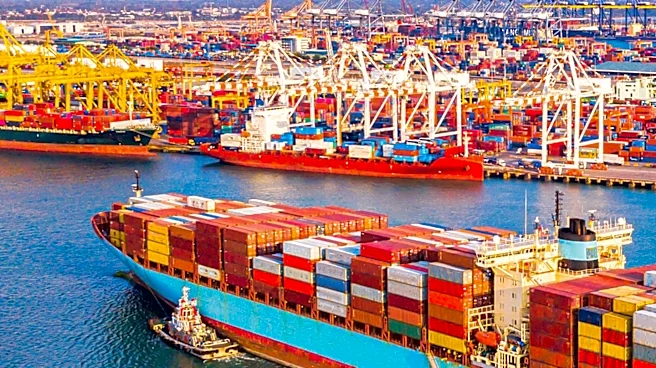
Chattogram Port, a critical hub for Bangladesh's trade, has experienced a complete operational halt due to an indefinite strike by workers and employees. The protest stems from the government's proposal to lease the New Mooring Container Terminal (NCT)
to Dubai-based DP World. This work abstention, which escalated from an eight-hour strike, has left jetties and yards deserted, with no movement of people or vehicles. Consequently, 11 vessels, including eight container ships, are stranded, and no import, export, or empty containers can be transported between the port and the 19 private inland container depots. The deadlock has raised concerns among exporters about meeting shipment deadlines during the peak season. Shipping Adviser M Sakhawat Hossain plans to visit the port to engage with protesters, emphasizing that the government will consider other actions if the movement continues. He clarified that the deal with DP World is not being rushed, having been in discussion since 2022, and negotiations have not yet reached a final stage. The Supreme Court is scheduled to hear a petition regarding the status quo of the leasing process on February 9.
Why It's Important?
The complete shutdown of Chattogram Port has significant implications for Bangladesh's economy, particularly its vital garment export sector. The inability to move goods will likely lead to missed export deadlines, potentially damaging the country's reputation as a reliable supplier and incurring financial penalties. This disruption could also cause a spike in commodity prices ahead of Ramadan, impacting consumers. For U.S. businesses that source garments and other goods from Bangladesh, this strike poses a direct threat to supply chains, potentially causing delays and increased costs. The situation highlights the vulnerability of global supply chains to local labor disputes and political decisions regarding infrastructure. The involvement of a foreign entity like DP World in a key national asset also raises questions about economic sovereignty and the balance between foreign investment and local interests, which could influence future international business engagements in the region.
What's Next?
Shipping Adviser M Sakhawat Hossain is scheduled to visit Chattogram Port to engage with the striking workers and employees. He intends to understand their reasons for continuing the protest before any deal is finalized and has indicated that the government may take further actions if the stalemate persists. The Supreme Court's full bench is set to hear a petition on February 9 regarding the status quo of the New Mooring Container Terminal lease to DP World, which could significantly influence the future of the proposed deal and the strike. Exporters, including those in the garment industry, are urgently seeking an immediate resolution to prevent further financial losses and damage to their international commitments. The outcome of these discussions and legal proceedings will determine when normal operations resume at the port and how the government proceeds with the terminal lease.
Beyond the Headlines
This port strike in Bangladesh underscores broader issues concerning labor rights, national asset management, and the impact of global economic partnerships on local communities. The workers' resistance to leasing the New Mooring Container Terminal to a foreign entity like DP World reflects concerns about job security, working conditions, and the potential for foreign control over critical national infrastructure. This situation could set a precedent for how similar public-private partnerships are perceived and negotiated in developing economies. The strike also highlights the delicate balance governments must maintain between attracting foreign investment for development and protecting the interests of their domestic workforce and national resources. The long-term implications could include a re-evaluation of labor laws, investment policies, and the role of international corporations in strategic sectors, potentially influencing future U.S. business and diplomatic relations with such nations.