




What's Happening?
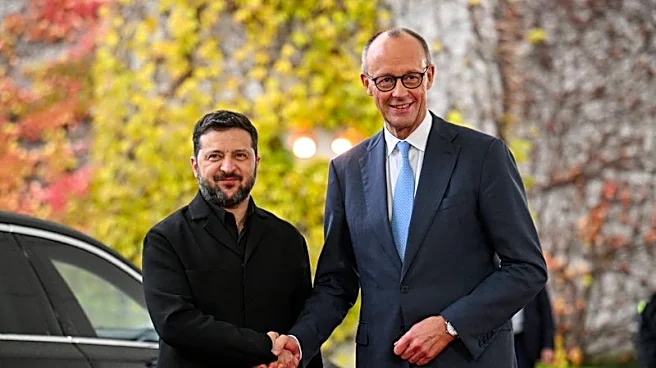
Qatar has announced plans to invest an additional €15 billion in the German economy, a move welcomed by German Chancellor Friedrich Merz. This announcement came after a meeting between Merz and Emir of Qatar Tamim bin Hamad Al Thani in Berlin. The new
investments are primarily aimed at promoting the growth and competitiveness of German companies, particularly in key industries such as artificial intelligence, semiconductors, and aviation, as well as defense. Qatar's sovereign wealth fund already holds stakes in several German companies, including Volkswagen. Beyond economic matters, the two nations also focused on strengthening cooperation in security policy and defense. Merz highlighted plans for security agencies to coordinate more closely to counter threats and enhance preparedness for cyberattacks. A partnership in development cooperation, particularly concerning the reconstruction of Syria, is also under consideration.
Why It's Important?
This substantial investment from Qatar holds significant implications for the German economy, providing a crucial boost to its technological and industrial sectors. For the U.S., this development is important as it strengthens a key European ally's economic resilience and technological capabilities. Increased German competitiveness in AI, semiconductors, and aviation could have ripple effects on global markets and supply chains, potentially impacting U.S. industries and strategic interests. The enhanced security and defense cooperation between Germany and Qatar also contributes to broader international stability, particularly in addressing cyber threats and regional conflicts. This partnership underscores a growing trend of Gulf states diversifying their investments globally and playing a more active role in international economic and security affairs, which can influence geopolitical dynamics relevant to U.S. foreign policy.
What's Next?
The €15 billion investment is expected to be strategically deployed to foster innovation and growth within Germany's advanced technology and defense sectors. This will likely lead to increased research and development, job creation, and enhanced industrial output in these areas. The strengthened security cooperation will involve more frequent exchanges and joint initiatives between German and Qatari security agencies, focusing on intelligence sharing and cybersecurity defense mechanisms. Discussions regarding development cooperation, particularly for Syria's reconstruction, are anticipated to progress, potentially leading to joint projects and humanitarian efforts. This partnership is poised to deepen the bilateral relationship, with both nations seeking to leverage each other's strengths for mutual benefit in a complex global environment.
Beyond the Headlines
The investment from Qatar signifies more than just financial capital; it represents a strategic alignment between Germany and a significant player in the Middle East. This move could be seen as part of Germany's broader strategy to diversify its economic partnerships and reduce reliance on single markets or regions, enhancing its economic security. For Qatar, these investments are a component of its long-term vision to diversify its economy beyond hydrocarbons and establish itself as a global financial and technological hub. The focus on defense and cybersecurity cooperation also highlights the increasing importance of these areas in international relations, as nations seek to protect critical infrastructure and national interests from evolving threats. This partnership could serve as a model for other nations looking to forge comprehensive economic and security alliances in the 21st century.