



What's Happening?
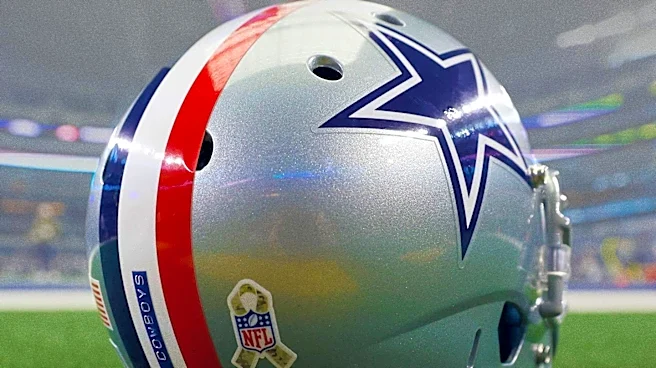
Former Dallas Cowboys players Nate Newton and James Washington have reacted to Jimmy Johnson's recent declaration of being a Philadelphia Eagles fan. Johnson, who coached the Cowboys to two Super Bowl victories in the 1992 and 1993 seasons, stated his
allegiance to the Eagles and the Miami Hurricanes. Newton, a former guard for the Cowboys, expressed his disapproval, humorously threatening to push Johnson off his boat. Washington, a former safety, attributed Johnson's statement to his 'pettiness,' suggesting it was a way for Johnson to 'stick it to the Cowboys.' Johnson's relationship with Eagles owner Jeffrey Lurie, who became owner in 1994, the same year Johnson left Dallas due to disagreements with Jerry Jones, was also highlighted. Lurie reportedly attempted to recruit Johnson to Philadelphia, but Johnson ultimately joined the Miami Dolphins.
Why It's Important?
This development highlights the enduring rivalries and strong personalities within the NFL, particularly between the Dallas Cowboys and Philadelphia Eagles. The comments from former players underscore the deep-seated loyalty and competitive spirit that define professional sports. Johnson's shift in allegiance, even in retirement, resonates significantly with the fanbase and former colleagues, demonstrating how personal histories and past conflicts can continue to influence public perception. The mention of Jeffrey Lurie's past attempts to bring Johnson to the Eagles also reveals the strategic and sometimes personal nature of team management decisions, impacting team dynamics and fan sentiment. This narrative provides insight into the cultural fabric of the NFL, where legacies and rivalries extend beyond active playing careers.
Beyond the Headlines
The 'pettiness' cited by former Cowboys players in response to Jimmy Johnson's Eagles fandom points to a deeper aspect of professional sports culture: the intertwining of personal relationships, professional rivalries, and public image. Johnson's history with Jerry Jones, marked by disagreements that led to his departure from Dallas, continues to shape his narrative years later. This situation illustrates how a coach's or player's identity can become inextricably linked to a franchise, and any perceived deviation from that loyalty can provoke strong reactions. It also touches on the concept of 'legacy' in sports, where achievements are often viewed through the lens of team affiliation and personal conduct, even long after retirement. The ongoing commentary from former players suggests a form of informal accountability within the sports community, where past actions and allegiances are continuously re-evaluated.