





What's Happening?
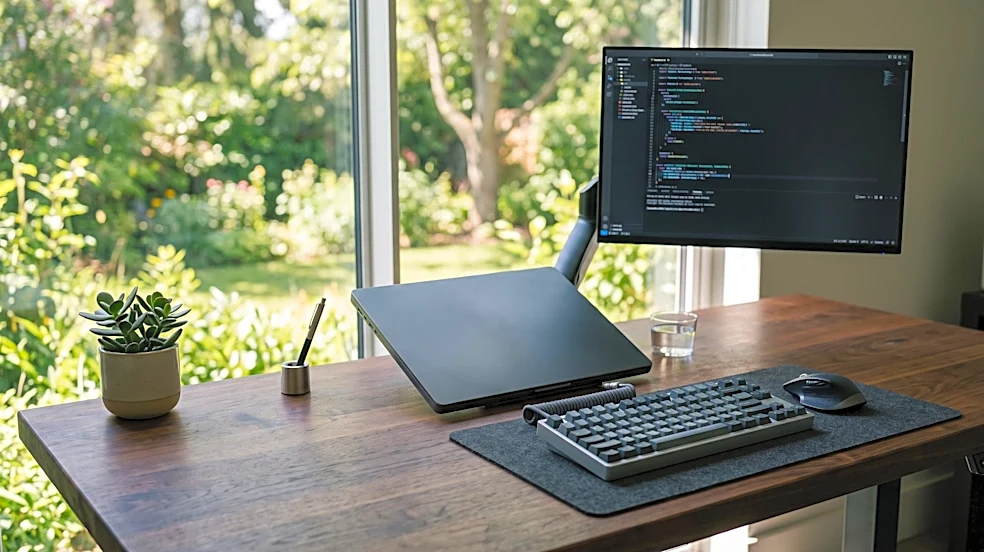
Infineon Technologies AG has expanded its ModusToolbox™ software ecosystem by introducing the ModusToolbox AI Assistant for Microsoft Visual Studio Code (VS Code). This new extension aims to enhance embedded systems development by providing AI coding
agents with hardware-specific context for PSoC™ Edge and PSoC Control microcontrollers. Traditional generic AI coding assistants often generate code that may appear correct but fails on actual hardware due to a lack of device-specific knowledge, such as targeting the wrong device, calling deprecated APIs, or missing crucial initialization steps. The ModusToolbox AI Assistant addresses these issues by aligning every suggestion with the developer’s specific target device, board, and peripheral configuration. This ensures that general-purpose AI assistants produce valid embedded code, with project context processed locally to maintain customer data privacy.
Why It's Important?
Embedded development often involves intricate hardware configurations, where even minor errors like incorrect pin assignments or clock settings can lead to extensive debugging efforts on physical hardware. The ModusToolbox AI Assistant is crucial because it bridges the gap between generic AI coding capabilities and the precise requirements of embedded systems. By providing device-specific instructions and development skills, the assistant enables AI agents to generate more accurate code, significantly reducing development time and potential errors. This innovation is particularly valuable for connected IoT devices that incorporate graphics and connectivity functions, as it accelerates the path from concept to deployment. The local processing of project context also offers a critical advantage for customers operating under strict IT security policies, ensuring data control and privacy.
What's Next?
The ModusToolbox AI Assistant supports a range of peripherals, including GPIO, I2C, SPI, UART, and DMA, as well as connectivity and RTOS functions. Before generating code, the assistant creates a project plan that developers can review and refine, defining the target device, board, libraries, and project structure. This workflow also facilitates the migration of existing projects to other Infineon devices. The extension is compatible with popular AI coding tools like GitHub Copilot, Cursor, and Windsurf, further integrating into existing developer workflows. Infineon's Executive Vice President of IoT – Compute & Wireless Business, Sam Geha, emphasized that AI-assisted workflows are transforming embedded systems development, and this tool allows developers to combine generative AI's productivity with device-specific knowledge while retaining control over their development data.
Beyond the Headlines
This development signifies a broader trend in the software industry where AI is increasingly being tailored to specialized domains. By embedding hardware-specific intelligence into AI coding assistants, Infineon is not only improving developer efficiency but also lowering the barrier to entry for complex embedded systems design. This could lead to faster innovation cycles and the creation of more sophisticated IoT devices. The emphasis on local processing for project context also highlights growing concerns around data privacy and intellectual property in the age of AI. Companies are seeking solutions that leverage AI's power without compromising sensitive design information, making tools like the ModusToolbox AI Assistant particularly attractive in industries where proprietary hardware designs are paramount.