







What's Happening?
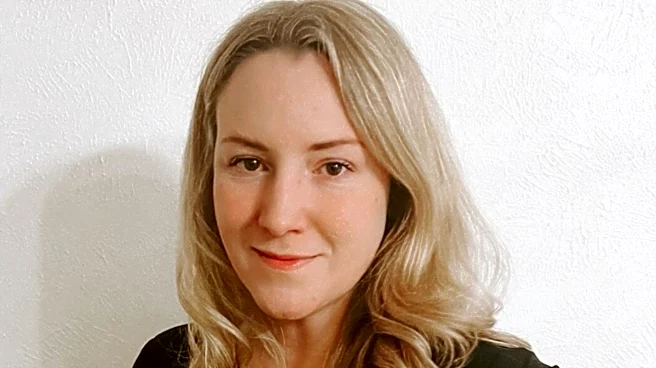
A freelance journalist, Brittany Anas, is sharing her personal journey of being pregnant with her first child at 44 years old, drawing parallels to actress Anne Hathaway's 'buzzer beater' pregnancy analogy. Anas, who is almost eight months pregnant with a daughter,
met her husband just before her 40th birthday. She recounts how she and her husband had decided they would be content whether they had children or remained a 'double income, no kids' (DINKS) couple. Her pregnancy was confirmed in January after a ski trip, following previous negative tests that had left her with a sense of grief. She describes the initial excitement quickly turning into anxiety due to the 'advanced maternal age' label and the associated increased risks, such as high blood pressure, preeclampsia, gestational diabetes, chromosomal abnormalities, and miscarriage, as highlighted by the Cleveland Clinic. Despite these concerns, her pregnancy has progressed remarkably smoothly, with active participation in pickleball and walks, and healthy blood pressure levels.
Why It's Important?
This personal account is important as it contributes to the normalization of later-life pregnancies in the U.S., reflecting a broader societal trend. The average age for first-time mothers in the U.S. has risen significantly from 21 in 1970 to just over 27 today, with birth rates among women in their early 30s surpassing those in their late 20s, and births among women 40 and older continuing to increase. This shift is attributed to more women pursuing education, building careers, and finding partners later in life, or simply choosing their own timeline for starting a family. The narrative challenges traditional perceptions of ideal childbearing age and highlights the resilience of the female body. By sharing her experience, Anas helps to demystify and destigmatize pregnancies at an older age, offering a relatable perspective for many women who may be facing similar decisions or circumstances. The story underscores the evolving dynamics of family planning and career development in contemporary American society.
What's Next?
As Brittany Anas approaches the delivery of her daughter, she will undergo an induced labor, a common practice for pregnancies at her age, rather than waiting for spontaneous labor. Her doctors have been closely monitoring her with extra testing due to her age, a standard procedure for 'advanced maternal age' pregnancies. The continued public sharing of such personal stories, especially by figures like Anne Hathaway and Natalie Portman, is likely to further normalize and encourage open discussions about later-life pregnancies. This trend could lead to increased support systems, resources, and medical advancements tailored to the specific needs of older expectant mothers. The ongoing shift in societal norms regarding family planning may also influence workplace policies and cultural attitudes towards women balancing careers and motherhood at different life stages, potentially fostering more inclusive environments for older parents.
Beyond the Headlines
Beyond the immediate narrative of a later-life pregnancy, this story touches upon deeper societal and cultural shifts in the U.S. The increasing average age of first-time mothers reflects evolving priorities, where women often prioritize education, career development, and financial stability before starting families. This trend can have long-term implications for demographics, economic participation, and the structure of American families. Ethically, it raises questions about societal pressures and the language used to describe older pregnancies, such as 'advanced maternal age' or 'geriatric pregnancy,' which can carry negative connotations. The narrative implicitly advocates for a more supportive and less judgmental approach to individual reproductive choices. Culturally, the visibility of celebrities and journalists sharing their experiences helps to reshape public perception, fostering a more inclusive understanding of what a 'typical' family journey looks like, and celebrating the diverse paths individuals take to parenthood.