




What's Happening?
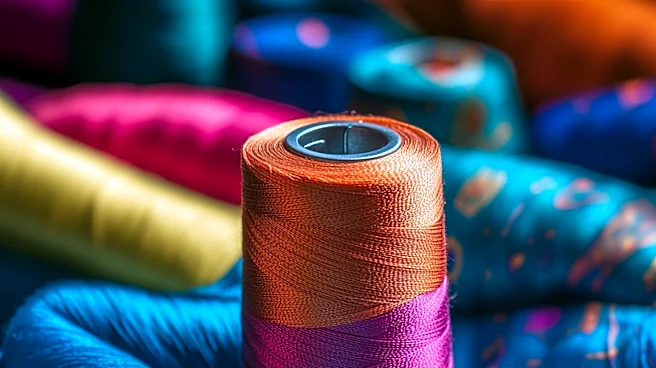
Pakistan is actively participating in Texworld New York City 2026, one of North America's largest textile sourcing exhibitions, to bolster its position in the US market. The event, held at the Jacob K. Javits Convention Centre, features a Pakistan Pavilion
showcasing products from five manufacturers, including home textiles, apparel, leather garments, sportswear, and gloves. This initiative is organized by the Trade Development Authority of Pakistan in collaboration with the Trade and Investment Wing of Pakistan's Consulate General in New York. The participation comes in response to new American tariffs imposed on Pakistani imports, which include a 10% ad valorem tariff effective from July 24. The tariffs were introduced following a US investigation into forced-labor import prohibitions, despite Pakistan's legal prohibition of forced labor.
Why It's Important?
The new tariffs pose a significant challenge to Pakistan's textile industry, which is a major contributor to the country's export economy. Textiles and apparel account for the majority of Pakistan's exports to the US, and the additional duties could potentially reduce these exports by $564 million in FY26. The impact could be even greater, with losses exceeding $2 billion if American buyers opt for lower-cost suppliers. This situation is exacerbated by rising domestic production costs and strong competition from countries like Bangladesh, India, Vietnam, and China. The tariffs could undermine Pakistan's competitiveness in its most important export market, affecting the country's economic stability and growth.
What's Next?
Pakistan's government and exporters may need to explore strategies to mitigate the impact of the tariffs, such as negotiating with US trade representatives or seeking alternative markets. Strengthening enforcement of labor laws could also be a focus to address the concerns raised by the US investigation. Additionally, Pakistan might consider enhancing its production efficiency and reducing costs to maintain competitiveness. The situation requires careful monitoring of trade relations and potential shifts in sourcing by American buyers.
Beyond the Headlines
The imposition of tariffs highlights broader issues in international trade relations, particularly concerning labor practices and compliance with global standards. It underscores the importance of ethical manufacturing and the need for countries to align their labor laws with international expectations. This development could prompt other nations to scrutinize their labor practices and trade policies, potentially leading to shifts in global trade dynamics. The situation also reflects the complexities of balancing economic interests with ethical considerations in international commerce.