


What's Happening?
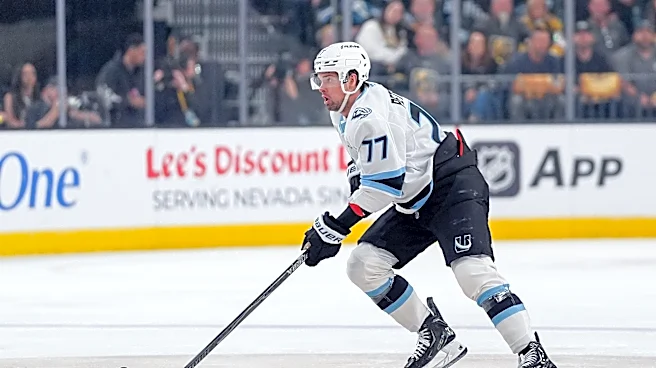
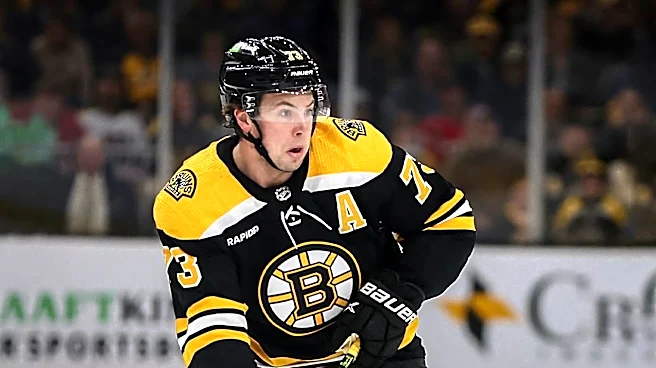
The Boston Bruins have acquired JJ Peterka from the Utah Mammoth in exchange for the No. 23 overall pick in the 2026 draft and a top-10 protected first-round pick from the Florida Panthers in 2028. This marks the second time in two years that Peterka has
been traded, having previously moved from the Buffalo Sabres to the Mammoth. Peterka, a 24-year-old forward, is coming off a season with 25 goals and 22 assists, totaling 47 points in 82 games. He is set to earn $7.7 million annually over the next four seasons. The Bruins aim to enhance their speed and skill on the wing, potentially positioning Peterka as the No. 2 right wing behind David Pastrnak. However, the frequent trades raise questions about his long-term fit and reliability.
Why It's Important?
The trade of JJ Peterka to the Boston Bruins highlights the team's strategic efforts to bolster their offensive lineup. However, the fact that Peterka has been traded twice in two years may indicate underlying concerns about his consistency or fit within team dynamics. For the Bruins, this move could impact their ability to re-sign Viktor Arvidsson, who is set to become an unrestricted free agent. The trade also reflects broader trends in the NHL, where teams are increasingly willing to make bold moves to secure young talent. The outcome of this trade will be closely watched, as it could influence future decisions regarding player acquisitions and team composition.
What's Next?
The Bruins will need to assess Peterka's integration into their lineup and his performance in the upcoming season. The team's management will also have to make decisions regarding Viktor Arvidsson's contract, as his potential departure could affect team chemistry. Additionally, the success of this trade will be evaluated based on Peterka's contribution to the Bruins' performance and whether he can establish himself as a reliable player. The Mammoth and Sabres will also monitor the development of the players they received in exchange for Peterka, as these trades could have long-term implications for their respective franchises.