



What's Happening?
Elie Saab, a luxury fashion house renowned for its red carpet designs, has partnered with H&M to release a new collection. This collaboration aims to make Saab's signature glamour more accessible to a broader audience, with prices starting at $39.99.
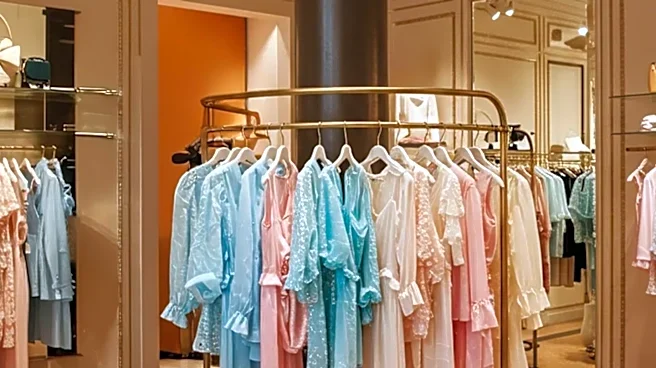
The 55-piece collection includes embellished gowns, sequined blazers, lace separates, faux-fur outerwear, footwear, and jewelry, all incorporating Saab’s distinctive embroidery and intricate detailing. Notable items include a $269 sequined bandeau dress, a $219 fluffy jacket, and a $429 embellished bandeau dress, alongside more affordable options like $89.99 blouses and a $39.99 floral choker. The collection also features menswear, handbags, and tailored evening jackets. This initiative follows H&M's tradition of collaborating with high-end designers to offer luxury fashion at more affordable price points.
Why It's Important?
This collaboration is significant for the U.S. fashion market as it democratizes luxury fashion, making high-end designer aesthetics available to a wider consumer base. Consumers who admire Elie Saab's red carpet creations, often seen on celebrities like Beyoncé, Zendaya, and Angelina Jolie, can now purchase pieces inspired by these designs without the prohibitive cost of couture. This move could influence fast fashion trends, pushing other retailers to seek similar partnerships or to incorporate more sophisticated design elements into their offerings. For Elie Saab, it expands brand recognition and market reach beyond its traditional luxury clientele, potentially cultivating new customers who might aspire to purchase full-priced items in the future. H&M benefits by enhancing its brand image with a prestigious designer collaboration, attracting fashion-conscious shoppers and driving sales.
What's Next?
The Elie Saab x H&M collection is now available online and in select stores, indicating immediate consumer access. The success of this collection will likely be measured by sales figures and consumer reception, which could influence future collaborations between luxury designers and mass-market retailers. If the collection performs well, it may encourage other high-end brands to explore similar partnerships, further blurring the lines between luxury and affordable fashion. Conversely, if the collection does not meet expectations, it might lead to a re-evaluation of such strategies within the fashion industry. The collaboration also sets a precedent for how luxury brands can maintain exclusivity while expanding their market presence through strategic alliances.
Beyond the Headlines
This partnership highlights a broader trend in the fashion industry where luxury brands are increasingly engaging with mass-market retailers to tap into new consumer segments and maintain relevance. It raises questions about the evolving definition of luxury and accessibility in fashion. While some purists might argue that such collaborations dilute a brand's exclusivity, others see it as a necessary evolution to stay competitive and reach a younger, more diverse audience. The ethical implications of fast fashion production, even when associated with luxury names, also remain a point of discussion, particularly concerning sustainability and labor practices. This collaboration could also inspire a new wave of design innovation, as designers adapt their high-fashion sensibilities to meet the demands of mass production and affordability.