


What's Happening?
Volvo Cars is introducing Hexagon Robotics’ Aeon humanoid robots at its Ghent plant in Belgium, marking the first factory to trial these machines. A pilot program is scheduled for the first half of 2027, with the goal of integrating them into live production
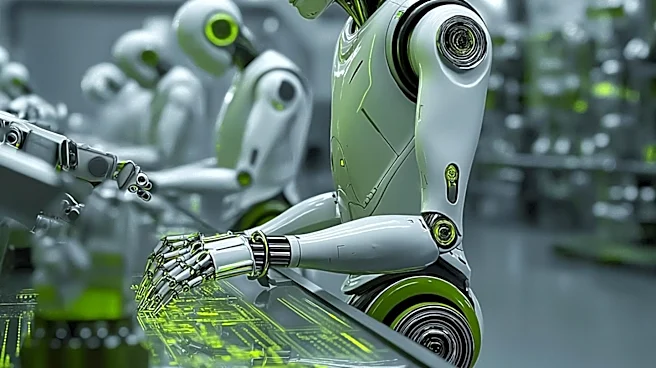
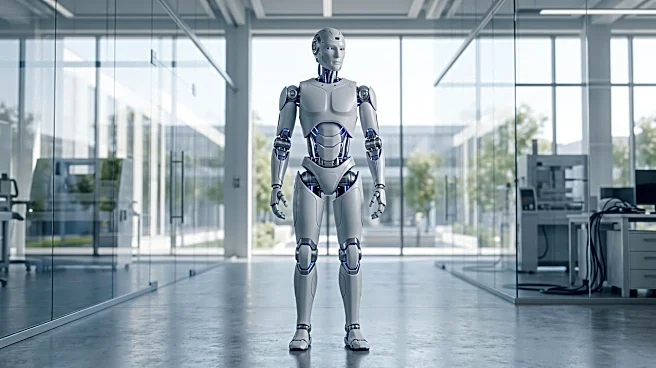
by mid-2027. These robots are intended to handle repetitive and physically demanding tasks, working alongside human employees. Volvo's team is training the Aeon robots using imitation learning, where the robots replicate demonstrated tasks. The initial assignment involves precisely placing components into fixtures, with future plans for multi-part handling, plant movement, and integration with existing automation systems. The Aeon robot stands 1.65 meters tall, weighs 60 kg, and can travel at speeds up to 2.4 m/s. Equipped with cameras and sensors, it has a 10 kg payload capacity, limiting it to lighter components, but it is designed for retraining for various jobs.
Why It's Important?
The integration of humanoid robots by Volvo Cars signifies a strategic shift in manufacturing automation, aiming to enhance efficiency and improve ergonomics for human workers. Unlike traditional fixed robotic arms, humanoid robots like Aeon offer greater flexibility, allowing them to operate within existing production lines without requiring extensive reconfigurations. This approach could set a precedent for other automotive manufacturers and industries facing similar challenges with labor-intensive or repetitive tasks. By taking on physically demanding roles, these robots can reduce the risk of workplace injuries and allow human employees to focus on more complex or supervisory functions. The success of this pilot program could influence future investment in humanoid robotics, potentially leading to widespread adoption across various sectors and impacting labor markets by redefining job roles and skill requirements.
What's Next?
Volvo Cars plans to deploy more Aeon units for the pilot phase. With the initial task currently underway, the company has approximately seven months to transition from validation to full production by mid-2027. The successful implementation of these robots in Ghent could lead to their deployment in other Volvo manufacturing facilities globally. This initiative will likely be closely watched by the broader manufacturing industry, as it represents a significant step towards more adaptable and human-friendly automation. Future developments will include expanding the robots' capabilities to include more complex tasks such as multi-part handling and seamless integration with existing automation infrastructure. The long-term impact could involve a re-evaluation of factory layouts and workforce training programs to accommodate a hybrid human-robot operational model.
Beyond the Headlines
The adoption of humanoid robots like Aeon by Volvo Cars raises broader questions about the future of work and the ethical implications of advanced automation. While the immediate benefit is improved ergonomics and efficiency, the long-term societal impact on employment and skill development warrants consideration. The ability of these robots to adapt to existing environments without major infrastructure changes could accelerate their integration into various industries, potentially leading to a significant transformation of the global workforce. This development also highlights the increasing sophistication of AI and machine learning in robotics, as the robots learn tasks through imitation. The balance between human labor and robotic assistance will be a critical aspect of future industrial policy and societal adaptation, requiring ongoing dialogue about job displacement, retraining initiatives, and the ethical frameworks governing human-robot collaboration.