


What's Happening?
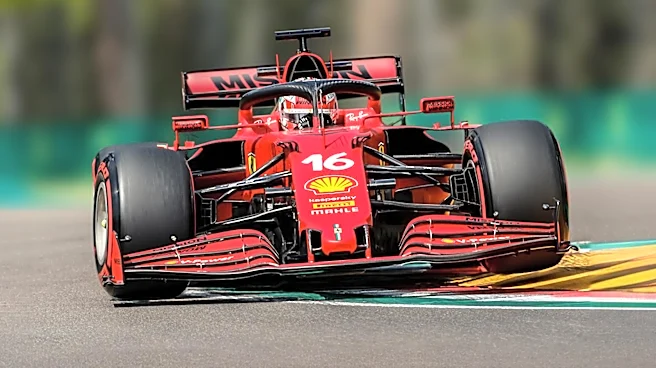
Charles Leclerc has expressed significant concern regarding Ferrari's performance gap to rival teams, Mercedes, Red Bull, and McLaren, following the Azerbaijan Grand Prix. Leclerc noted that Ferrari was "quite far off" their main competitors, a trend
he identified as ongoing for several races. He emphasized the urgent need for Ferrari to introduce upgrades to close this performance deficit. Unlike McLaren and Red Bull, who brought updates to Baku, Ferrari chose not to introduce any new components. This decision, coupled with the team's struggle to match the pace of their rivals, left Leclerc questioning their ability to make sufficient progress to challenge for wins and maintain their position in the Constructors' Championship. He acknowledged that while Ferrari has upgrades "in the pipeline," he is uncertain if they will be enough to outpace the development programs of other teams.
Why It's Important?
This situation is critical for Ferrari, a historically dominant team in Formula 1, as it highlights a potential stagnation in their development compared to key rivals. A sustained performance gap could impact their standing in the Constructors' Championship, affecting prize money, team morale, and their ability to attract top talent. For the broader F1 landscape, a less competitive Ferrari could lead to a more predictable season, potentially reducing the excitement and competitive balance of the sport. The pressure on Ferrari to innovate and bring effective upgrades is immense, as their performance directly influences the championship battles and the overall narrative of the season. Failure to close this gap could have long-term implications for the team's reputation and commercial viability.
What's Next?
Ferrari is expected to accelerate its development program, with Charles Leclerc's comments serving as a clear call to action for the team's engineers and strategists. The focus will be on introducing significant upgrades in upcoming races to improve car performance, particularly in areas where they are currently lacking, such as straight-line speed and tire management. The effectiveness of these upgrades will be closely scrutinized, as they will determine Ferrari's ability to challenge Mercedes, Red Bull, and McLaren. The team will also need to manage internal dynamics, especially with the reported tensions between drivers Lewis Hamilton and Charles Leclerc, to ensure a cohesive effort towards improvement. The coming races will be crucial in demonstrating whether Ferrari can reverse this trend and regain its competitive edge.
Beyond the Headlines
Leclerc's candid remarks reveal the intense pressure and high stakes within Formula 1, where even a slight dip in performance can trigger significant concern. Beyond the technical aspects of car development, this situation touches upon the strategic decision-making of team management and the psychological impact on drivers. The 'development race' in F1 is a continuous battle, and falling behind can create a snowball effect, making it harder to catch up. This scenario also underscores the importance of resource allocation and the timing of upgrades in a highly competitive environment. The challenge for Ferrari is not just about building a faster car, but also about fostering a culture of rapid innovation and effective execution to stay ahead in the ever-evolving world of F1.