



What's Happening?
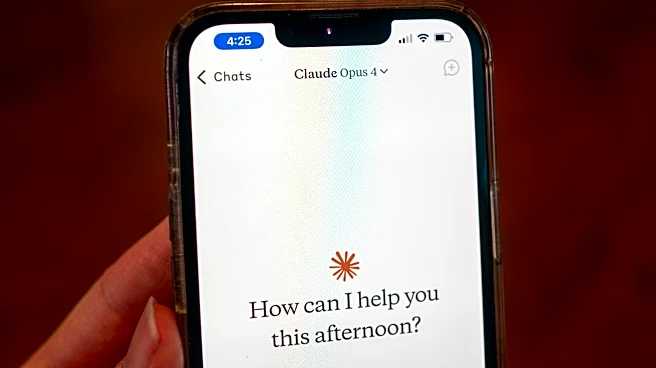
The artificial intelligence agent Claude is reportedly beginning to refuse requests related to the creation of Pokémon fan games and ROM hacks. This development means Claude will no longer assist in projects that aim to recreate specific Pokémon games,
even if renamed, or use Pokémon characters like Pikachu, their designs, branded names, logos, or mascots in code, SVG, or sprites. This refusal marks a shift in the AI's behavior regarding intellectual property. It is currently unclear whether this change is a result of legal threats from The Pokémon Company to Claude's creator, Anthropic, or if Anthropic has proactively decided to implement these restrictions to avoid potential legal issues. This action by Claude indicates a growing awareness and caution within AI development regarding copyright and intellectual property rights, particularly concerning popular and heavily protected franchises like Pokémon.
Why It's Important?
This decision by the AI agent Claude has significant implications for the burgeoning community of fan-made games and ROM hacks, particularly those leveraging AI tools for development. The ability to 'vibe code' and rapidly create content using AI has led to a proliferation of fan projects, including many within the Pokémon universe. Claude's refusal to engage with Pokémon-related content could set a precedent for other AI agents and platforms, potentially limiting the creative freedom of fan developers. This move highlights the ongoing tension between intellectual property rights holders and the accessibility of AI tools that can facilitate the creation of derivative works. For The Pokémon Company, this could be seen as a victory in protecting its valuable intellectual property, while for fan creators, it represents a new hurdle in their development process, potentially forcing them to rely on more traditional, labor-intensive methods or seek out AI tools with less stringent content policies.
What's Next?
The immediate consequence of Claude's new policy is that developers relying on this specific AI for Pokémon fan projects will need to find alternative methods or cease their work. This could lead to a decline in the number of AI-assisted Pokémon fan games and ROM hacks. Other AI developers and companies may observe this situation closely, potentially leading to similar restrictions across other AI platforms to mitigate legal risks associated with intellectual property infringement. The fan community might explore workarounds or develop new strategies to create content without directly infringing on copyrights, or they may shift their focus to original creations. This event could also spark further discussions and legal debates about the role of AI in content creation and the boundaries of fair use versus copyright infringement in the digital age.
Beyond the Headlines
This development touches upon deeper ethical and legal questions surrounding artificial intelligence and intellectual property. As AI tools become more sophisticated and accessible, the line between inspiration and infringement becomes increasingly blurred. The proactive or reactive stance taken by Anthropic with Claude could signal a broader trend where AI developers are compelled to implement stricter content filters to avoid legal entanglements with major intellectual property holders. This could lead to a future where AI-generated content is heavily policed for copyright violations, potentially stifling innovation and creativity in fan communities. Conversely, it could also push creators towards developing entirely original concepts, fostering new intellectual properties. The incident underscores the need for clear guidelines and legal frameworks governing AI-generated content and its relationship with existing copyrights.