


What's Happening?
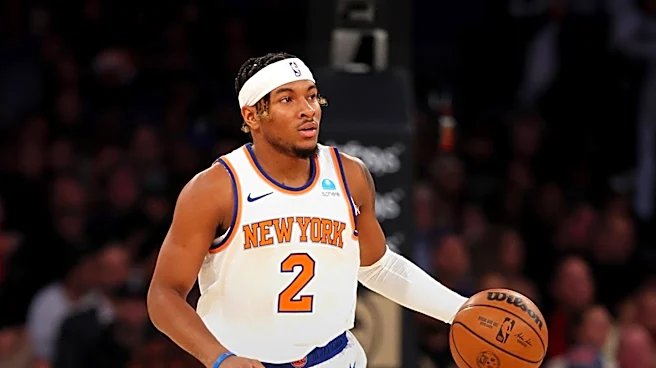
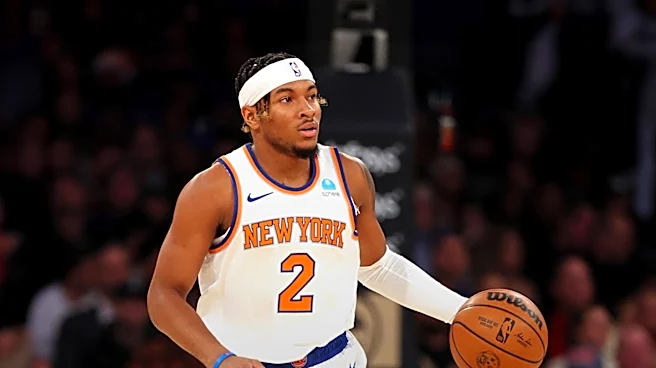
The New York Knicks may now have a clearer path to retaining guard Miles McBride, following an unexpected increase in the NBA's 2027-28 salary cap projections. The league has raised next year's forecast by $2 million, a seemingly small amount that nonetheless
provides significant financial flexibility for teams navigating the second apron of the salary cap. For the Knicks, this adjustment means their projected space beneath the second apron for the 2027-28 season has increased from approximately $7.2 million to $9.2 million. This additional cap space is crucial for the team, which has been carefully managing its finances to stay below the second apron, a 'no-fly zone' for owner James Dolan. The revised projections make it more feasible for the Knicks to offer McBride a new contract, potentially around $12.5 million in its first year, without exceeding their financial limits.
Why It's Important?
This development is significant for the Knicks' roster construction and long-term strategy. Miles McBride is considered a valuable asset due to his strong defense, three-point shooting volume, and efficiency, despite being a smaller guard who doesn't primarily orchestrate the offense. The ability to retain him without incurring severe luxury tax penalties or sacrificing other key players is a major advantage. The NBA's salary cap rules, particularly the second apron, impose strict limitations on team spending and roster moves. The additional $2 million in cap space, while seemingly minor, can make a substantial difference in a team's ability to keep talent and remain competitive. This situation highlights the intricate financial planning required in professional sports and how even small changes in league projections can have a ripple effect on team decisions and player contracts.
What's Next?
The Knicks will likely continue to evaluate their financial situation and roster needs in light of these new salary cap projections. The possibility of Karl-Anthony Towns signing a long-term extension before the 2026-27 season could further alleviate cap concerns, as his 2027-28 salary might drop enough to create additional space for McBride. This scenario would allow the Knicks to retain McBride and maintain sufficient second-apron space to build out their roster. The team's management will need to make strategic decisions regarding contract negotiations and potential trades to optimize their cap flexibility. The increased financial wiggle room suggests that a trade of McBride, once considered almost inevitable, is now less likely, allowing the Knicks to focus on continuity and player development.
Beyond the Headlines
The impact of salary cap adjustments extends beyond individual player contracts, influencing the competitive balance and strategic decisions across the entire league. The NBA's collective bargaining agreement and its financial mechanisms, such as the second apron, are designed to promote parity and prevent excessive spending by a few wealthy teams. However, teams like the Knicks constantly navigate these complex rules, seeking creative ways to retain talent and build championship contenders. This situation also underscores the evolving value of specific player archetypes in the modern NBA. Players like McBride, who excel in specialized roles like defense and efficient three-point shooting, are becoming increasingly valuable, even if they don't fit traditional star player molds. The ability of teams to retain such players, even with tight financial constraints, reflects a sophisticated understanding of roster construction and salary cap management.