





What's Happening?
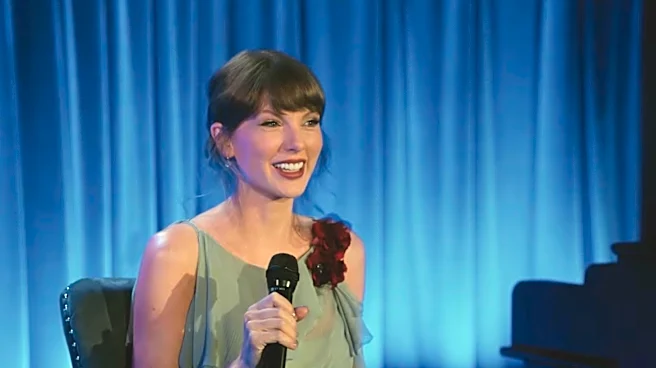
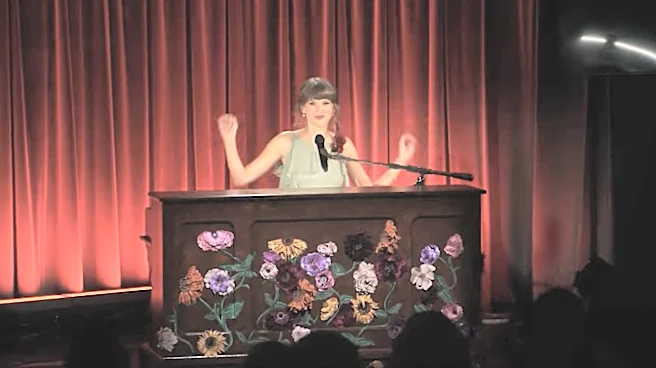
Taylor Swift recently reflected on her country music origins during an interview with Recording Academy CEO Harvey Mason Jr. at the Grammy Museum. The conversation, part of 'The Icon Sessions,' saw Swift discussing her two-decade career, emphasizing her enduring
connection to her country roots. She stated, 'I love my country roots more and more the further along this path I get, and I want to honor them more and more.' This statement has ignited speculation among fans and the music industry about a potential return to the genre that launched her career. Swift's debut single, 'Tim McGraw,' released in 2006, was a country hit, reaching No. 6 on Billboard's Hot Country Songs chart and winning Breakthrough Video of the Year at the 2007 CMT Music Awards. Despite her significant evolution into pop music, beginning notably with her 2012 album 'Red,' Swift maintains that Nashville remains central to her artistic identity and songwriting process. She highlighted how her early experiences in Nashville shaped her approach to storytelling through music.
Why It's Important?
Taylor Swift's acknowledgment of her country roots is significant for several reasons. For the country music industry, a potential return or even a stronger embrace of country elements in her future work could bring a massive influx of new listeners and renewed attention to the genre. Swift's immense global platform and dedicated fanbase could significantly boost country music's commercial success and cultural relevance, potentially leading to increased album sales, streaming numbers, and concert attendance for other country artists. For Swift herself, revisiting her country origins could offer a full-circle moment, allowing her to explore new creative avenues while honoring the foundation of her career. This move could also resonate deeply with long-time fans who appreciate her early work, while potentially attracting new fans interested in her genre-bending evolution. The music industry as a whole will be watching closely, as Swift's decisions often set trends and influence market dynamics, demonstrating the power of an artist to shape industry narratives and audience preferences.
What's Next?
While Taylor Swift has not officially confirmed a return to country music, her recent statements suggest that her next album could feature a more prominent country influence. The music industry and her fanbase will be closely monitoring any announcements regarding new music releases or collaborations. Given her history of strategic album rollouts and fan engagement, any shift towards country would likely be a carefully planned move, potentially involving collaborations with established country artists or producers. Her past re-recordings, known as 'Taylor's Versions,' have already demonstrated her ability to reclaim and reinterpret her musical catalog, and a return to country could be seen as another form of artistic reclamation. Future interviews, social media posts, or surprise song choices during her ongoing tours could offer further clues about her musical direction. The anticipation surrounding her next project will undoubtedly continue to build, with many expecting her to honor her Nashville beginnings in a meaningful way.
Beyond the Headlines
Beyond the immediate commercial implications, Taylor Swift's renewed focus on her country roots touches upon deeper themes of artistic identity and authenticity. In an industry often criticized for its commercial pressures and genre constraints, Swift's journey from country ingenue to pop superstar and now potentially back to her origins highlights the fluidity of artistic expression. Her emphasis on storytelling and personal narrative, which she attributes to her Nashville upbringing, underscores the enduring power of genuine artistic voice. This move could inspire other artists to explore their foundational influences, fostering a broader appreciation for genre diversity and artistic evolution. It also speaks to the idea of an artist's continuous growth and self-discovery, demonstrating that success doesn't necessitate abandoning one's past but rather integrating it into an evolving artistic vision. The cultural impact of such a shift could reinforce the idea that authenticity and connection to one's origins are valuable assets in the long-term trajectory of a creative career.