







What's Happening?
Dara Khosrowshahi, CEO of Uber, has stated that he prioritizes short-term planning over long-term strategies, dedicating 60% to 70% of his time to near-term goals. This approach comes amidst the ongoing advancements in artificial intelligence and the race
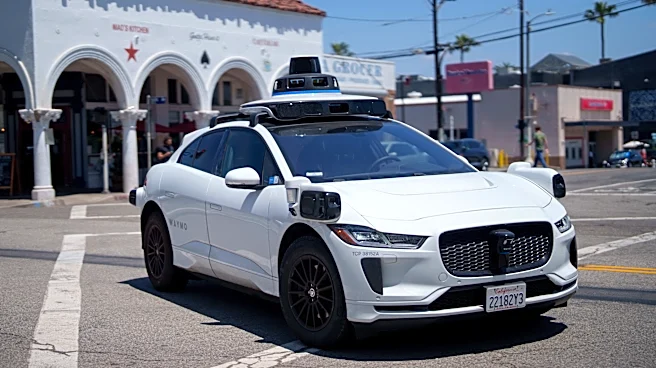
to popularize autonomous vehicles. Khosrowshahi acknowledges the eventual probability of autonomous vehicles becoming a norm for Uber and has established corporate partnerships, such as with Waymo, to advance self-driving car accessibility. However, given the uncertainty surrounding the timeline for widespread autonomous vehicle adoption, he focuses on immediate objectives rather than extensive long-term forecasting. This strategy is reportedly aligned with psychological and psychotherapeutic perspectives on effective goal-setting.
Why It's Important?
Khosrowshahi's emphasis on short-term planning for a major technology and transportation company like Uber has significant implications for the U.S. business landscape. It suggests a pragmatic approach to innovation in rapidly evolving sectors, where long-term predictions can be highly speculative. This strategy could allow Uber to remain agile and responsive to immediate market demands and technological shifts, potentially leading to quicker adaptation and competitive advantages. However, it also raises questions about the company's long-term vision and investment in foundational research that might not yield immediate returns. For the broader U.S. tech industry, this could signal a trend towards more iterative development cycles and a focus on tangible, near-term milestones, potentially influencing how other companies in AI and autonomous vehicle development structure their strategic planning.
What's Next?
Uber is expected to continue its focus on near-term operational improvements and strategic partnerships, particularly in the autonomous vehicle sector. The company's collaboration with entities like Waymo will likely progress, aiming to integrate self-driving technology into its services as it becomes more viable. Khosrowshahi's approach suggests that Uber will likely introduce new features and programs based on immediate feedback from drivers and couriers, indicating a continuous cycle of incremental innovation. Future announcements from Uber may reflect this short-term focus, potentially including new service offerings, market expansions, or technological integrations that address current user needs and operational efficiencies rather than distant, speculative advancements.
Beyond the Headlines
Khosrowshahi's strategic pivot towards short-term planning in a high-tech industry like autonomous vehicles highlights a broader philosophical debate within corporate leadership: the balance between visionary long-term goals and pragmatic short-term execution. While long-term visions can inspire and guide, an over-reliance on them in volatile markets can lead to misallocation of resources or missed immediate opportunities. Conversely, an exclusive focus on the short term might neglect disruptive innovations that require sustained, patient investment. Uber's strategy could influence how investors evaluate tech companies, potentially favoring those demonstrating consistent, measurable progress over those with ambitious but distant goals. This approach also underscores the increasing difficulty of predicting technological adoption curves, especially in complex fields like AI and autonomous driving, where regulatory, ethical, and societal factors play as significant a role as technological breakthroughs.