






What's Happening?
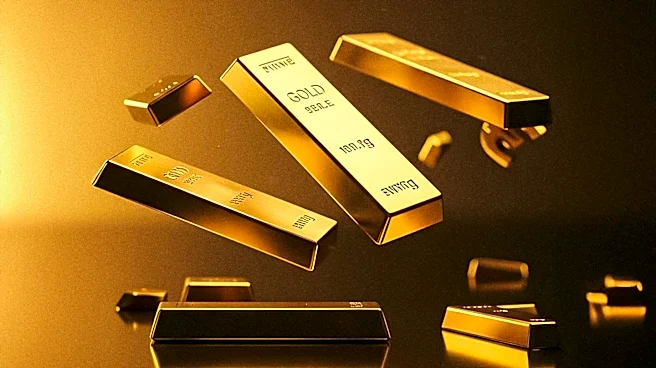
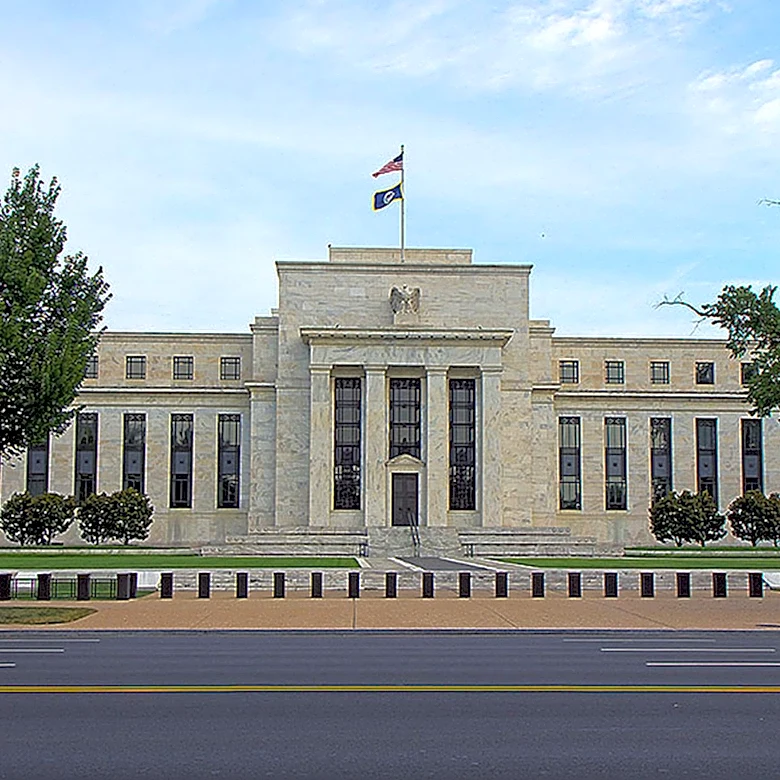
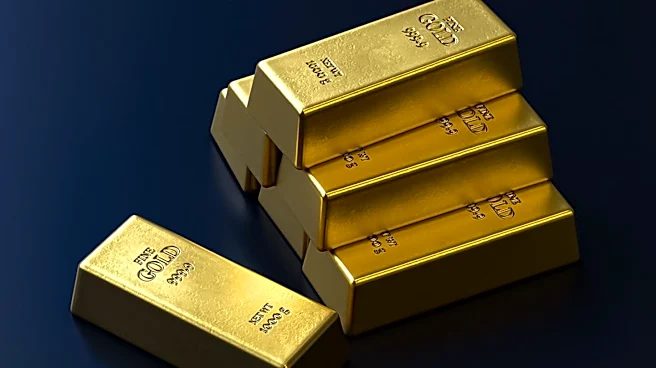
Gold prices have increased, marking a weekly gain after four consecutive weeks of decline. This rise is attributed to weaker-than-expected U.S. jobs data, which has tempered expectations for a near-term interest rate hike by the Federal Reserve. Spot
gold rose by 1.3%, reaching its highest level since June 23, while U.S. gold futures for August delivery also saw a significant increase. The U.S. nonfarm payrolls report showed a rise of 57,000 jobs, falling short of the 110,000 anticipated by economists, leading to a reassessment of the likelihood of a rate hike in September.
Why It's Important?
The increase in gold prices reflects market reactions to economic indicators that influence monetary policy decisions. Lower interest rates reduce the opportunity cost of holding non-yielding assets like gold, making it more attractive to investors. The U.S. dollar's decline, following the jobs data, further supports gold's appeal by making it cheaper for holders of other currencies. This development highlights the sensitivity of financial markets to economic data and the potential impact on investment strategies and asset allocation.
What's Next?
Market participants will closely monitor upcoming economic data and Federal Reserve communications for further insights into the trajectory of interest rates. The possibility of a delayed rate hike could sustain interest in gold and other precious metals as investors seek safe-haven assets. Additionally, central banks' actions regarding gold reserves will be watched, as they remain a key factor in the long-term demand for gold. The evolving economic landscape may also influence currency markets and broader financial conditions.
Beyond the Headlines
The current situation underscores the complex interplay between economic data, market expectations, and central bank policies. As investors navigate these dynamics, there may be increased focus on diversifying portfolios to manage risks associated with interest rate fluctuations and currency volatility. The role of gold as a hedge against inflation and economic uncertainty may gain renewed attention, influencing both individual and institutional investment decisions.