




What's Happening?
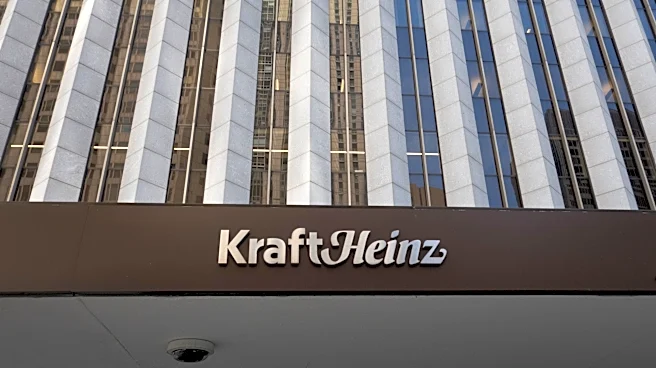
Kraft Heinz (NASDAQ:KHC) currently offers a quarterly dividend of $0.40, translating to an approximate 6.3% yield, with the next payment scheduled for December 23. The company's adjusted earnings guidance of $2.07 to $2.13 per share suggests a payout
ratio between 75% and 77%. Furthermore, Kraft Heinz has demonstrated strong free cash flow conversion, nearing 110%, which has facilitated $3.982 billion in debt repayment this year. However, the company reported a 1.96% decline in third-quarter sales, and its adjusted Operating Income is projected to decrease by 16% to 18%. The dividend payout has remained constant since a previous reduction from $0.625, and the company's shares have fallen by 51.63% over the past decade. These factors raise questions about the sustainability of the high dividend yield, particularly in the context of shrinking sales and reduced operating income.
Why It's Important?
The situation at Kraft Heinz is significant for investors, particularly those relying on dividend income, as it highlights potential risks associated with high-yield stocks in the packaged food sector. While the dividend appears covered on an adjusted basis, the underlying operational challenges, such as declining sales and operating income, could signal future instability. A high dividend yield can sometimes indicate financial strain rather than robust performance, potentially trapping investors seeking stable income. The company's long-term stock performance, with a significant decline over ten years, further underscores these concerns. This scenario could influence investment strategies, prompting a closer examination of a company's fundamental health beyond just its dividend yield, especially in sectors traditionally favored by retirees for income generation.
What's Next?
Investors will likely monitor Kraft Heinz's upcoming earnings reports closely for any signs of stabilization or further deterioration in sales and operating income. The company's ability to maintain its dividend payout will depend on its operational performance and cash flow generation in the face of declining revenue. Any further cuts to the dividend could significantly impact investor confidence and stock valuation. Additionally, the broader packaged food industry may face increased scrutiny, with investors evaluating other companies in the sector for similar warning signs of high yields masking underlying financial weaknesses. The company's strategy to address declining sales and improve operating income will be crucial in determining its future financial health and dividend sustainability.
Beyond the Headlines
The challenges faced by Kraft Heinz extend beyond immediate financial metrics, touching upon broader shifts in consumer preferences and market dynamics within the packaged food industry. Consumers are increasingly opting for healthier, fresher, and more niche food options, which can impact traditional processed food giants. This trend necessitates significant innovation and adaptation from established companies like Kraft Heinz to remain competitive. The pressure to maintain dividend payouts while navigating these market shifts can lead to difficult strategic decisions, potentially impacting long-term growth investments. The situation also highlights the ethical considerations for companies in balancing shareholder returns with sustainable business practices and product innovation in a rapidly evolving consumer landscape.