
What's Happening?
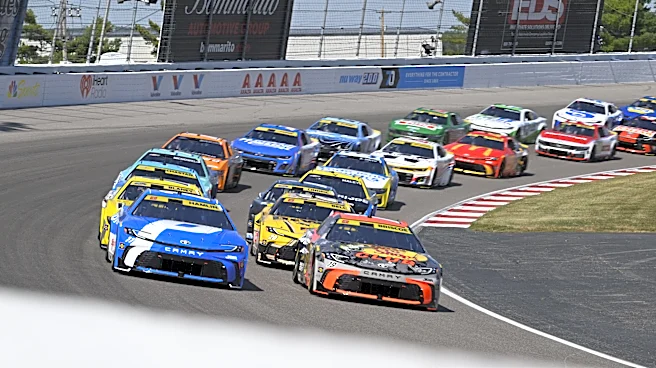
NASCAR insider Freddie Kraft has issued a strong critique of Joe Gibbs Racing (JGR) driver William Sawalich, accusing him of "reckless payback" that ultimately "ruined his own day" during a recent race at Gateway. The incident stemmed from an ongoing
rivalry between Sawalich and Corey Day, which had escalated at Darlington. At Gateway, with less than 50 laps remaining, Sawalich retaliated against Day after Day's car pushed into his. Sawalich abruptly turned across the track, making heavy door-to-door contact with Day, sending Day's car spinning into the inside wall and ending his race. While Day suffered a significant setback, dropping from fifth to eighth in the Chase standings, Kraft argued that Sawalich, despite not being in the Chase, damaged his own car and compromised a promising night by finishing sixteenth.
Why It's Important?
This incident highlights the contentious issue of on-track retaliation in NASCAR and its consequences for drivers and teams. While NASCAR did not penalize Sawalich, the debate over intentional wrecking versus hard racing is a recurring theme in the sport. For Corey Day, the incident had a direct and negative impact on his championship aspirations, forcing him to potentially win multiple races to recover. For William Sawalich, Kraft's criticism underscores the potential for drivers to harm their own performance and team resources through retaliatory actions, even if they are not directly competing for a championship. The lack of a penalty from NASCAR, despite apparent retaliation, also raises questions about the consistency of enforcement and the boundaries of acceptable aggressive driving in the series.
What's Next?
The controversy surrounding William Sawalich's actions and the lack of a NASCAR penalty will likely continue to be a topic of discussion among fans, media, and potentially other drivers. While no immediate penalties were issued, past instances show NASCAR can take action when clear intent to wreck another competitor is established, as seen with Ryan Preece's penalty for wrecking Ty Gibbs. The ongoing rivalry between Sawalich and Day will be closely watched in future races, as their history suggests further confrontations are possible. Teams and drivers will need to consider the implications of such aggressive maneuvers, both for their own performance and for the broader perception of sportsmanship in NASCAR.
Beyond the Headlines
The incident between William Sawalich and Corey Day delves into the ethical and competitive complexities of professional racing. It raises questions about the line between aggressive, competitive driving and intentional retaliation, and how that line is policed by the sport's governing body. The 'ruins his own day' argument by Freddie Kraft suggests a deeper strategic consideration for drivers: whether the satisfaction of payback outweighs the potential self-inflicted damage and loss of opportunity. This dynamic is a constant undercurrent in motorsports, where personal rivalries can sometimes overshadow championship goals, impacting not just the individuals involved but also the integrity and excitement of the competition for fans. The debate also reflects differing philosophies within the racing community regarding how such incidents should be handled.