
What's Happening?
White House Senior Adviser Kevin Hassett has indicated that U.S. inflation could remain slightly above the Federal Reserve's 2% target. This statement carries significant implications for the future direction of the Federal Reserve's monetary policy.
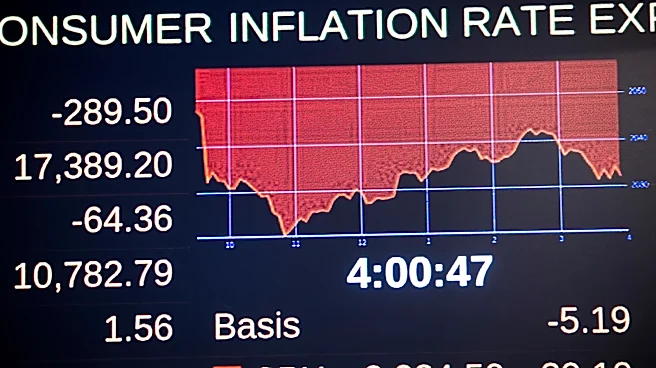
The Fed's established inflation target is 2%, as measured by the personal consumption expenditures (PCE) price index. Recent data revealed that headline PCE inflation reached 3.8% year-over-year in October, marking a notable increase from previous months. This elevated inflation rate, nearly double the Fed's target, suggests that the central bank may face continued pressure to maintain restrictive rate policies. The Federal Reserve recently kept its policy rate range between 3.75% and 4.00%, but Hassett's comments, coupled with current inflation figures, could influence future decisions regarding interest rates.
Why It's Important?
The potential for U.S. inflation to consistently exceed the Federal Reserve's 2% target is crucial for several reasons. Persistent high inflation erodes purchasing power for consumers, impacting household budgets and overall economic stability. For businesses, it can lead to increased operational costs, making long-term planning and investment more challenging. If the Fed perceives inflation as a sustained threat, it may be compelled to implement further interest rate hikes, which could slow economic growth, increase borrowing costs for businesses and individuals, and potentially lead to a recession. Conversely, if the Fed misjudges the persistence of inflation and eases monetary policy too soon, it risks embedding higher inflation expectations into the economy, making it harder to control in the future. Market participants are already anticipating a 'Hike–Pause–Hike' scenario for the Fed's upcoming meetings, reflecting the uncertainty and the potential for continued monetary tightening.
What's Next?
Market participants will be closely monitoring upcoming economic data releases, including monthly inflation reports and employment figures, as these will be critical in influencing the Federal Reserve's decision-making process. Statements and projections from key Federal Reserve members, such as Jerome Powell and Kevin Warsh, will also provide important indicators of potential policy shifts. Developments that suggest persistent inflation above target levels are likely to reinforce the need for further rate hikes. Conversely, softer economic data could lead the Fed to reassess its current monetary stance, potentially leading to a pause or even a reduction in interest rates. The market's current pricing suggests an increased likelihood of further rate hikes in 2026, indicating that investors are preparing for a prolonged period of restrictive monetary policy if inflation remains elevated.
Beyond the Headlines
The ongoing debate about inflation and the Federal Reserve's response highlights a broader challenge in economic policy: balancing price stability with economic growth. If inflation remains stubbornly high, it could lead to a re-evaluation of the Fed's long-term monetary policy framework and its ability to achieve its dual mandate of maximum employment and price stability. The implications extend beyond immediate economic indicators, potentially affecting long-term investment strategies, the stability of financial markets, and the global economic outlook. The credibility of the Federal Reserve is also at stake; its ability to guide inflation back to its target will be a key test of its independence and effectiveness. This situation could also spark political discussions about fiscal policy's role in managing inflation, potentially leading to calls for coordinated efforts between monetary and fiscal authorities.