






What's Happening?
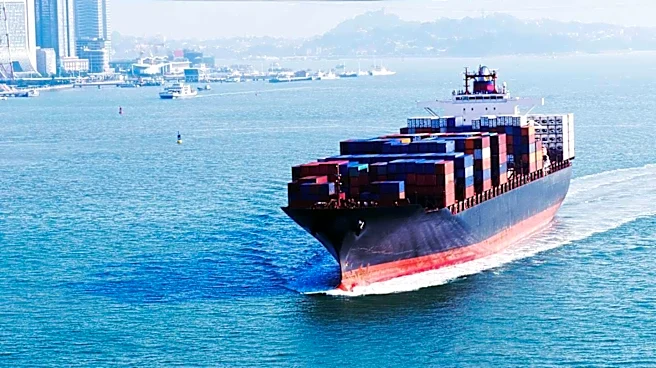
Lloyd's Register (LR), A.P. Moller – Maersk, the Port of Felixstowe in the UK, and South Carolina Ports (Charleston) in the U.S. have launched the 'Pink Corridor Project.' This initiative aims to evaluate the operational, safety, regulatory, and security
feasibility of deploying nuclear-powered commercial container vessels on transatlantic trade routes, specifically between Charleston and Felixstowe. The project utilizes a conceptual vessel design based on previous work with Core Power on floating nuclear reactors. Unlike 'Green Corridors' that rely on renewable fuels, 'Pink Corridors' refer to shipping lanes powered by nuclear energy. The project is examining the necessary port facilities and radiation safety measures for high-density container terminals, as well as safeguards and security protocols for tracking nuclear fuel and protecting reactor management systems from physical and cyber threats. This collaboration reflects a growing interest in nuclear technology as a means to achieve more sustainable maritime operations.
Why It's Important?
The 'Pink Corridor Project' signifies a potential paradigm shift in global maritime shipping, offering a pathway to significantly reduce carbon emissions in the industry. For the U.S., participation through South Carolina Ports (Charleston) positions it at the forefront of developing advanced, sustainable shipping infrastructure. If successful, nuclear-powered shipping could decrease reliance on fossil fuels, leading to greater energy independence and reduced operational costs for shipping lines in the long term. This initiative could also spur innovation in nuclear technology and maritime engineering within the U.S., creating new jobs and expertise. However, it also introduces complex challenges related to nuclear safety, regulation, and security, which will require robust frameworks to ensure public and environmental protection. The project's success could set a precedent for other international shipping routes, influencing global trade and environmental policies.
What's Next?
The 'Pink Corridor Project' will continue to evaluate the operational, safety, regulatory, and security aspects of nuclear-powered commercial container vessels. This includes developing comprehensive safety protocols, establishing new liability frameworks to enable reasonable insurance rates for commercial nuclear ships, and reconciling diverse maritime safety rules with U.S. civilian nuclear regulations and UK standards. The project will also focus on the practicalities of port infrastructure, such as specialized facilities and radiation safety measures tailored for high-density container terminals. The findings from this collaborative effort are expected to inform future decisions regarding the widespread adoption of nuclear technology in merchant shipping, potentially paving the way for the deployment of nuclear-powered cargo ships by 2035, as some anticipate.
Beyond the Headlines
The exploration of nuclear-powered shipping through the 'Pink Corridor Project' delves into profound ethical and societal considerations beyond immediate operational benefits. The historical apprehension surrounding nuclear technology, stemming from past incidents and waste disposal concerns, presents a significant hurdle for public acceptance. The project will need to address these anxieties through transparent communication and demonstrable safety measures. Furthermore, the development of robust international legal and regulatory frameworks for nuclear shipping is crucial, as current maritime laws were not designed for such advanced propulsion systems. The long-term environmental impact of nuclear waste management, even with advanced reactor designs, will require careful consideration. This initiative could also reshape geopolitical dynamics, as nations with advanced nuclear capabilities might gain a strategic advantage in global trade and logistics, potentially influencing international relations and security policies.