



What's Happening?
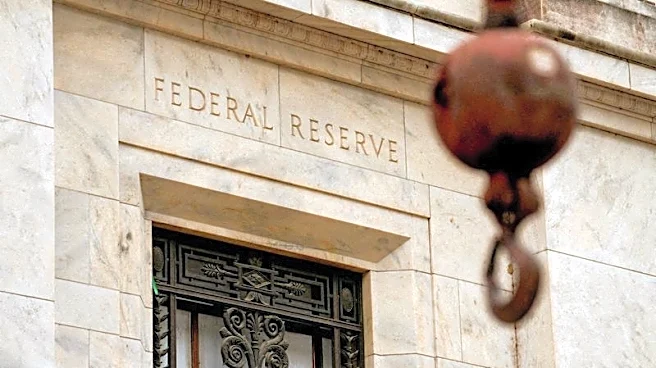
Federal Reserve Vice Chair for Supervision, Michelle Bowman, recently commented on the U.S. economic landscape, noting that while the labor market has shown unexpected improvement, progress in lowering inflation has been disappointing. This statement
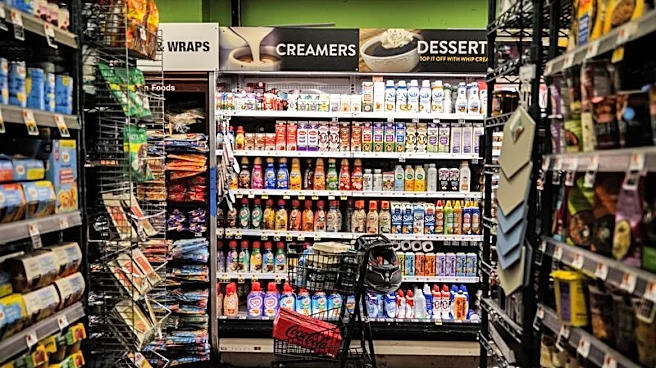
comes as American consumers are significantly altering their Black Friday shopping behaviors due to persistent inflation and rising living costs. A survey by Drive Research indicates that 68% of Black Friday shoppers cutting back this year attribute it to increasing grocery costs, a notable rise from 57% in 2025. Overall living costs are cited by 76% of consumers as the primary reason for reduced spending, up from 70%. Consequently, 41% of Black Friday shoppers anticipate spending less on holiday shopping this year, compared to 31% in 2025. The Federal Reserve maintained its benchmark interest rate between 3.75% and 4% at its October meeting, reflecting ongoing efforts to manage economic stability.
Why It's Important?
The observations from Fed Vice Chair Michelle Bowman underscore the ongoing challenge of inflation for U.S. economic policy and consumer welfare. The Federal Reserve's dual mandate includes maintaining maximum employment and price stability, and Bowman's remarks highlight the difficulty in achieving the latter despite a robust labor market. For U.S. industries, particularly retail, these shifting consumer behaviors during a critical shopping period like Black Friday signal a need for adaptation. Retailers are facing increased skepticism from shoppers regarding the authenticity of deals, with 64% believing prices are inflated before sales. This necessitates greater transparency and value demonstration from businesses to attract cautious consumers. The emphasis on essential goods like groceries and cleaning supplies in holiday shopping lists also indicates a reprioritization of spending, impacting discretionary retail sectors more severely. The sustained pressure on household budgets due to rising costs could lead to a more conservative spending environment in the long term, affecting economic growth and corporate profitability.
What's Next?
In response to the evolving economic conditions, retailers are expected to continue adjusting their strategies to meet consumer demands for value and transparency. Emily Rodgers, Director of Marketing, suggests that winning retailers will be those who clearly demonstrate actual savings to customers. The Federal Reserve will likely continue to monitor inflation and labor market data closely, with future interest rate decisions hinging on whether inflation shows more significant signs of cooling. Consumers, facing ongoing financial pressures, will likely maintain their cautious spending habits, prioritizing necessities and seeking genuine discounts. This trend could lead to a sustained shift in retail dynamics, where price and perceived value become even more critical factors in purchasing decisions, potentially impacting holiday sales forecasts and overall economic performance in the coming months.
Beyond the Headlines
The current economic climate, as highlighted by Fed Vice Chair Bowman and consumer spending trends, points to a deeper societal impact beyond mere financial figures. The erosion of purchasing power due to inflation, particularly in essential categories like groceries, is forcing a re-evaluation of consumer priorities and expectations. The skepticism surrounding Black Friday deals reflects a broader distrust in marketing tactics and a demand for greater corporate accountability. This shift could foster a more discerning consumer base that values genuine savings and transparency over perceived discounts. Furthermore, the sustained focus on managing household costs may lead to long-term changes in saving and spending habits, potentially influencing personal finance strategies and the overall economic resilience of American households. The challenge for policymakers and businesses will be to address these underlying concerns to restore consumer confidence and foster sustainable economic growth.