






What's Happening?
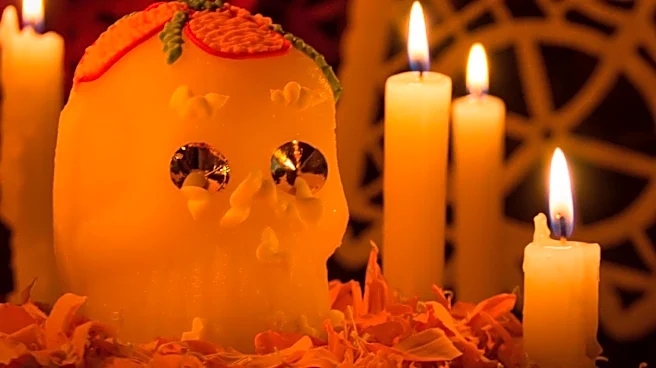
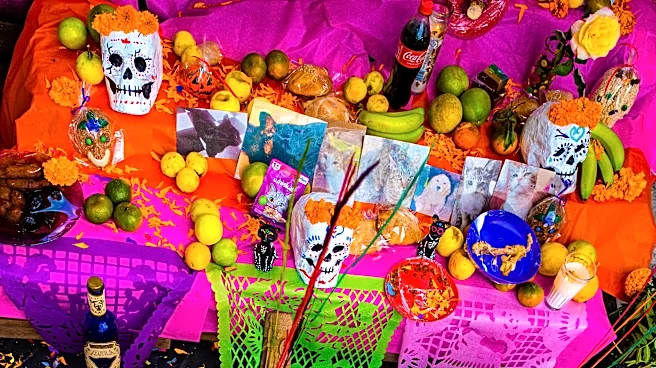
Mexico's Day of the Dead (Día de Muertos) is a vibrant tradition that blends Catholic and Indigenous customs, offering a distinct approach to remembering deceased loved ones. Unlike the often somber Western view of death, Día de Muertos is a celebration
where families create altars (ofrendas) adorned with marigolds, food, and personal items to welcome back the spirits of the dead. This holiday, which has gained recognition north of the border, encourages active remembrance and a communal acceptance of mortality. The tradition emphasizes that while loved ones may be gone, their influence and memories continue to live on through those who remember them.
Why It's Important?
The growing awareness and adoption of Día de Muertos traditions in the U.S., particularly in areas with significant Mexican heritage, represent a cultural enrichment and a shift in how death and remembrance are perceived. This holiday offers an alternative framework for grieving, moving away from taboo and towards celebration and connection. For Mexican-American communities, it reinforces cultural identity and provides a powerful way to honor ancestors. For the broader U.S. society, it introduces a perspective that can help individuals cope with loss in a more communal and less isolating manner, potentially influencing mental health approaches to grief and bereavement. The commercial aspect also sees an increase in demand for related goods and services, from traditional foods to decorative items.
What's Next?
The influence of Día de Muertos is expected to continue expanding in the U.S., with more communities and individuals embracing its celebratory aspects of remembrance. Educational initiatives and cultural events will likely further popularize the holiday, fostering greater understanding and participation. This could lead to increased demand for traditional Mexican crafts, foods, and cultural experiences. As the holiday becomes more integrated into the American cultural landscape, it may also inspire new forms of remembrance and grief processing that blend traditional Mexican practices with contemporary American customs, creating a more diverse and inclusive approach to honoring the deceased.
Beyond the Headlines
Beyond its immediate cultural impact, Día de Muertos challenges the prevailing Western discomfort with death, offering a profound lesson in accepting mortality as a natural part of life. The tradition encourages a healthy relationship with grief, transforming it from a private sorrow into a communal act of love and memory. It highlights the importance of storytelling and the passing down of family history, ensuring that the legacies of loved ones endure. This perspective can foster a deeper appreciation for life itself, reminding individuals to live fully and create meaningful connections, knowing that their own stories will one day be remembered and celebrated.