




What's Happening?
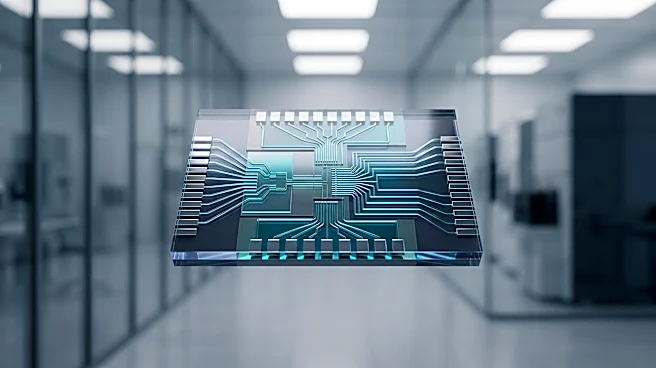
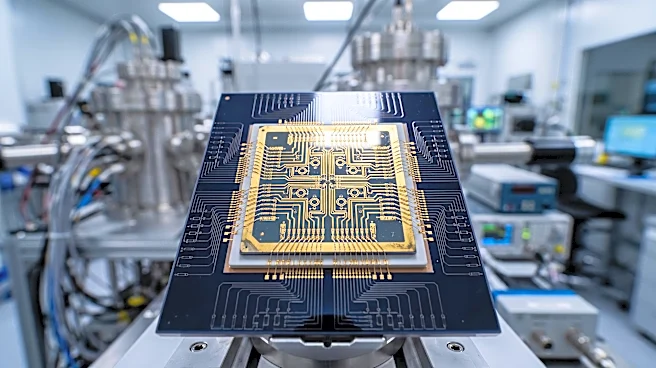
Rigetti Computing is making significant strides in superconducting quantum computing technology, bolstered by processor enhancements and substantial federal funding. The company's 108-qubit Cepheus-1 processor achieved a 99.5% median two-qubit gate fidelity
in the third quarter of 2026, showcasing the effectiveness of its chiplet-based design for developing larger and more capable quantum systems. This progress is further supported by a definitive agreement with the U.S. Department of Commerce, which will provide up to $100 million in funding. This federal investment is earmarked for critical technology development, including advanced chip architectures, expanded cryogenic infrastructure, and next-generation readout electronics. Rigetti's long-term roadmap includes plans to introduce a processor with over 300 qubits and approximately 99.7% median two-qubit gate fidelity by mid-2028, with an even more ambitious goal of a system exceeding 1,000 qubits and 99.9% fidelity within the subsequent three years. The modular chiplet approach is a key differentiator, designed to enhance processing capacity within a single dilution refrigerator, potentially reducing the need for complex networking between separate quantum systems.
Why It's Important?
The advancements by Rigetti Computing are crucial for the U.S. in the burgeoning field of quantum computing. The successful demonstration of high gate fidelity with its Cepheus-1 processor indicates a significant step towards practical quantum systems, which could revolutionize various industries from medicine to finance. The substantial federal funding from the U.S. Department of Commerce underscores the government's commitment to fostering domestic leadership in quantum technology, providing a critical financial injection that supports innovation and infrastructure development. This investment helps secure the U.S.'s competitive edge against other nations investing heavily in quantum research. Furthermore, Rigetti's modular chiplet approach could lead to more scalable and economically viable quantum computers, potentially lowering the barriers to adoption for businesses and research institutions. As the industry is still in its early commercialization phase, these developments are vital for translating theoretical quantum advantages into tangible, real-world applications, positioning the U.S. at the forefront of this transformative technology.
What's Next?
Rigetti Computing plans to continue its aggressive development roadmap, aiming to launch a processor with over 300 qubits and improved gate fidelity by mid-2028, followed by a system exceeding 1,000 qubits within three years. The company will focus on leveraging the $100 million federal funding to advance chip architectures, expand cryogenic infrastructure, and develop next-generation readout electronics. A key challenge will be to translate these engineering advancements into commercially viable quantum computing solutions, which requires continuous improvement in qubit coherence, gate fidelity, connectivity, and the development of real-time error-correction capabilities. The company's ability to meet these performance targets, expand customer adoption, and convert technological progress into sustainable revenue growth will be critical for its long-term prospects. The quantum computing industry is still in its nascent stages, primarily serving research and development needs, so Rigetti's next steps will involve navigating this early commercialization phase and demonstrating the practical utility of its quantum systems for broader production workloads.
Beyond the Headlines
The progress made by Rigetti Computing, particularly with its chiplet innovation and significant federal funding, signals a broader strategic push within the U.S. to establish dominance in quantum computing. Beyond the immediate technological advancements, this development highlights the increasing convergence of government investment and private sector innovation in critical emerging technologies. The modular chiplet approach could set a new standard for quantum system design, potentially influencing how future quantum computers are built and scaled globally. This could lead to a more democratized access to quantum computing resources as systems become more efficient and cost-effective. Ethically, the development of powerful quantum computers raises questions about data security and cryptography, as these machines could potentially break current encryption standards. Therefore, ongoing research into quantum-resistant cryptography will be crucial. Culturally, the success of companies like Rigetti could inspire a new generation of scientists and engineers to pursue careers in quantum physics and computer science, fostering a robust talent pipeline essential for sustained innovation in this field.