
What's Happening?
The rise of smart home devices is transforming living spaces, offering convenience and efficiency through internet-connected gadgets controlled remotely. The global smart home market is projected to reach
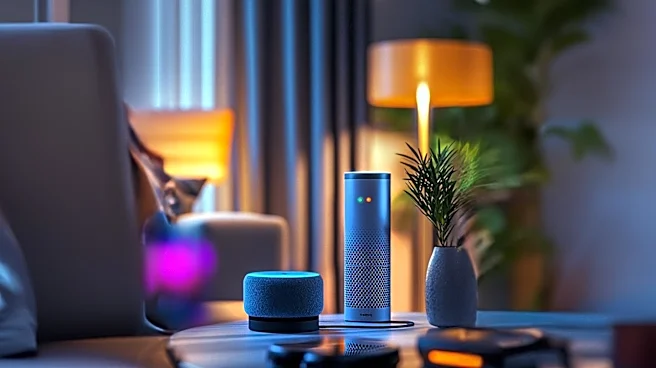
$174 billion by 2025, indicating a significant shift in consumer behavior. A key benefit highlighted for these devices is improved energy efficiency, with smart thermostats capable of learning preferences and adjusting temperatures to save energy. When choosing devices, beginners are advised to consider their specific needs, focusing on areas like lighting, security, and voice assistants. Compatibility is crucial, as devices often operate on different ecosystems such as Amazon Alexa, Google Assistant, or Apple HomeKit, requiring users to ensure seamless communication between products. Setting up devices typically involves user-friendly apps, connecting to Wi-Fi, and configuring settings, with security measures like strong passwords and regular firmware updates being essential.
Why It's Important?
The increasing adoption of smart home devices has significant implications for U.S. consumers and industries. For households, these technologies offer tangible benefits like reduced utility bills through energy-efficient solutions, contributing to both personal savings and broader sustainability goals. The emphasis on compatibility underscores the need for industry standards and interoperability, which can either foster or hinder market growth and consumer satisfaction. As more homes become automated, the demand for reliable internet infrastructure and robust cybersecurity measures will intensify, impacting telecommunications and tech security sectors. The market's rapid growth also signals opportunities for innovation in device development, software integration, and installation services, creating new jobs and economic activity across various sectors. Understanding these foundational aspects is crucial for consumers to make informed decisions and for businesses to meet evolving market demands.
What's Next?
The smart home market is expected to continue its rapid evolution, with new technologies and devices emerging regularly. Future trends indicate advancements in artificial intelligence, leading to more intuitive devices that can learn from user behavior and adapt accordingly. This will likely drive further adoption and enhance the user experience. Manufacturers are also expected to focus on improving interoperability among devices, aiming for seamless functionality regardless of brand or ecosystem. This will simplify the setup and integration process for consumers, making smart home technology more accessible. As demand grows, there will be an ongoing need for robust security measures and user education to ensure safe and effective use of these interconnected systems, with continuous updates to firmware and security protocols becoming standard practice.
Beyond the Headlines
The widespread integration of smart home devices into daily life carries deeper implications beyond immediate convenience. The reliance on interconnected systems raises questions about digital literacy and accessibility, as individuals need to understand how to manage and secure these technologies. There's also an evolving relationship between humans and their living spaces, where homes become more responsive and anticipatory, potentially altering daily routines and personal habits. Ethical considerations around data privacy are paramount, as these devices collect extensive information about user behavior and preferences, necessitating strong regulatory frameworks and transparent data handling practices. Long-term, the smart home trend could contribute to a more connected, data-driven society, influencing urban planning, energy consumption patterns, and even the design of future residential architecture, pushing towards more intelligent and adaptive environments.