

What's Happening?
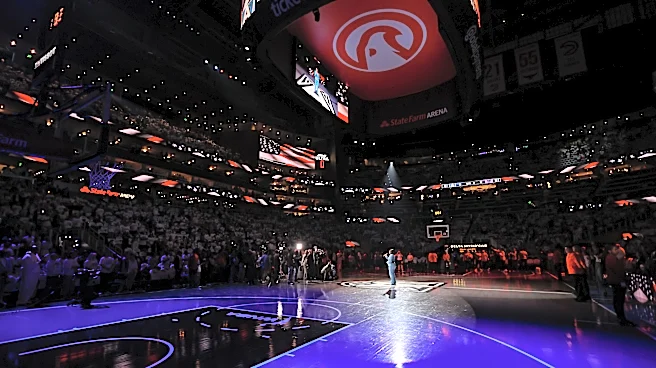
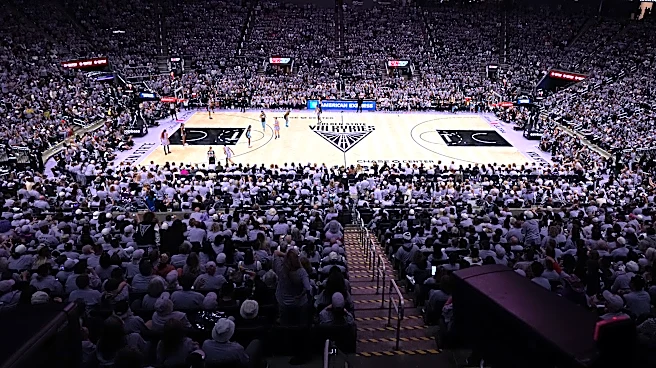
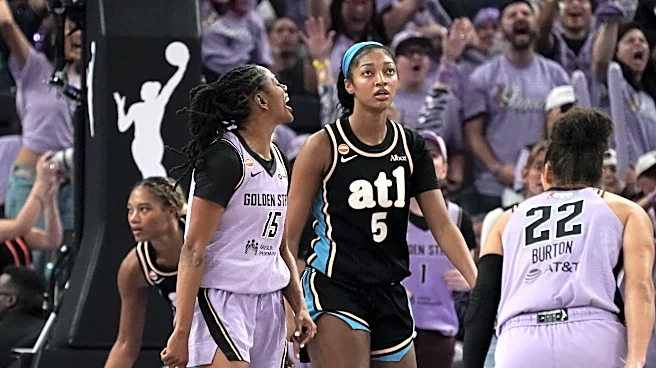
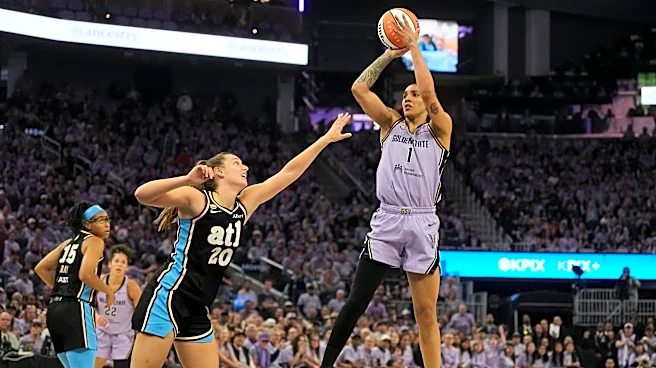
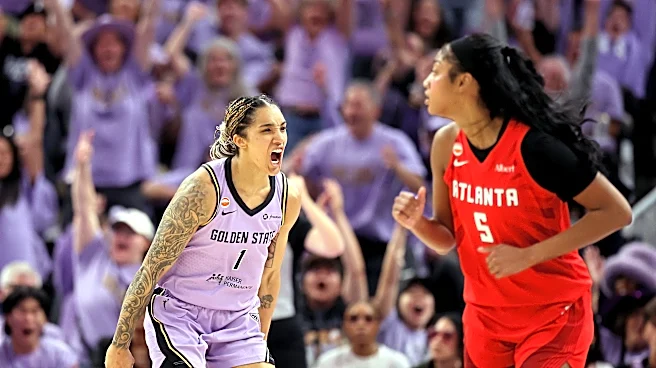
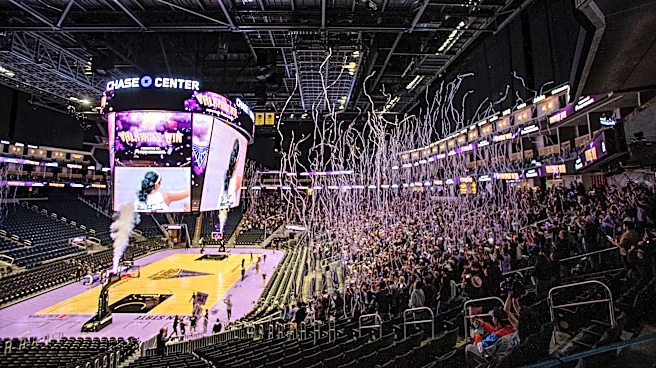
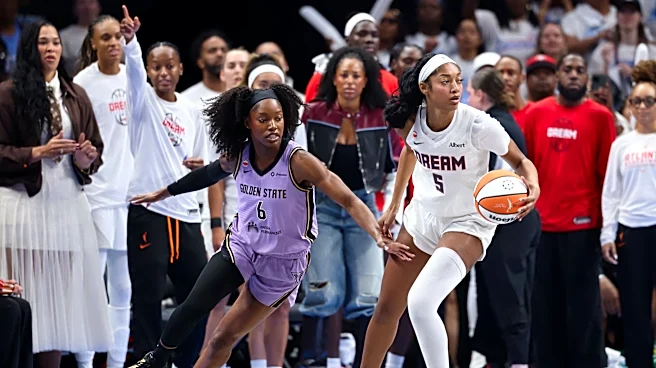
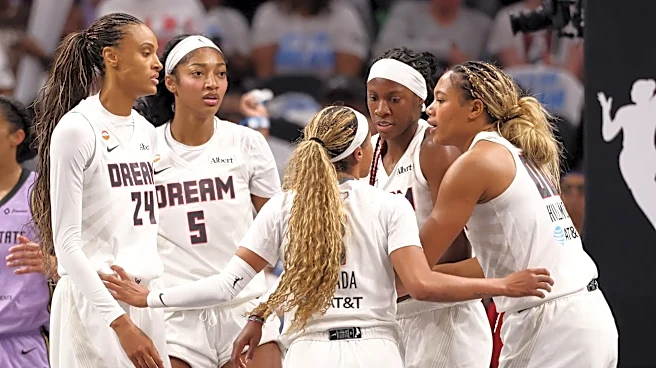
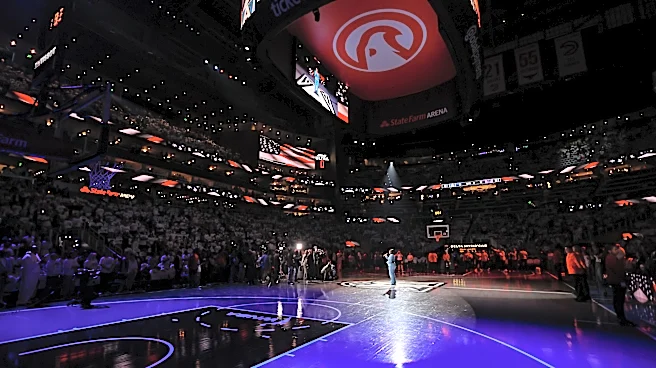
The WNBA has rescheduled Game 6 of the Finals between the Atlanta Dream and the Golden State Valkyries from 8 p.m. to 12:30 p.m. ET on Thursday. This change allows the game to be hosted at the 17,000-seat State Farm Arena, operated by the Hawks, instead
of the smaller 3,500-seat Gateway Center. The Hawks have a regular-season game scheduled for Thursday night, necessitating the earlier WNBA tip-off. The Golden State Valkyries are currently leading the series 3-2 and could secure their first franchise title with a win in Game 6. The decision has sparked significant criticism from women's sports bar owners, who argue that the early start time, which translates to 9:30 a.m. in San Francisco, will negatively impact fan viewership and their businesses. Clarissa Flores, owner of Level Sporting Club in Chicago, expressed her surprise and frustration on social media, highlighting that many fans will be at work or school during the game.
Why It's Important?
The WNBA's decision to move a potential title-clinching Finals game to a matinee slot carries significant implications for the league's growth and its relationship with its dedicated fanbase and supporting businesses. Women's sports bar owners, such as Clarissa Flores of Level Sporting Club, Chandler Robertson of Blazers in Brooklyn, and Jen Barnes of Rough & Tumble in Seattle, rely on primetime WNBA games to drive substantial revenue. Barnes, for instance, typically generates $10,000 to $15,000 from a weeknight WNBA Finals game, revenue she anticipates losing due to the early tip-off. The concern extends beyond immediate financial losses, as Jenny Nguyen, founder of The Sports Bra in Portland, points out that reduced viewership numbers for a Finals game could be misinterpreted as a lack of audience interest, potentially undermining the league's progress. This scheduling conflict highlights a broader challenge in women's sports: ensuring logistical decisions support, rather than hinder, the burgeoning commercial and cultural momentum of leagues like the WNBA.
What's Next?
In response to the WNBA's scheduling decision, women's sports bar owners are adapting their operations to accommodate the matinee game. Clarissa Flores's Level Sporting Club in Chicago, for example, will open for the 11:30 a.m. CT tip-off, branding it as a remote-work function, despite it being the first time her bar has opened on a weekday morning. Blazers in Brooklyn also plans to open for the early afternoon game, though its owner, Chandler Robertson, expects significantly lower turnout compared to a primetime slot. The immediate focus will be on the viewership numbers for Game 6 and the overall fan engagement, which will likely be scrutinized by the league and its stakeholders. The WNBA may face continued pressure to address scheduling conflicts more proactively in the future, especially as the league continues to grow in popularity and commercial value. The outcome of Game 6 and any subsequent Game 7 will also determine the 2026 WNBA champion.
Beyond the Headlines
The controversy surrounding the WNBA Finals Game 6 scheduling decision reveals deeper tensions within the rapidly growing women's sports landscape. While the league aims to maximize exposure by utilizing larger venues like State Farm Arena, the logistical compromises, such as an early tip-off, can inadvertently alienate a crucial segment of its fanbase and the businesses that champion women's sports. This incident underscores the ongoing challenge of balancing commercial interests with fan accessibility and engagement. The passionate reactions from women's sports bar owners, who are often at the forefront of building community around these leagues, highlight a perceived disconnect between league decision-makers and the grassroots efforts that contribute significantly to the WNBA's success. It also raises questions about the long-term strategy for women's sports, emphasizing the need for integrated planning that considers the entire ecosystem of fans, businesses, and media partners to ensure sustainable growth and avoid undermining the very momentum they seek to build.