








What's Happening?
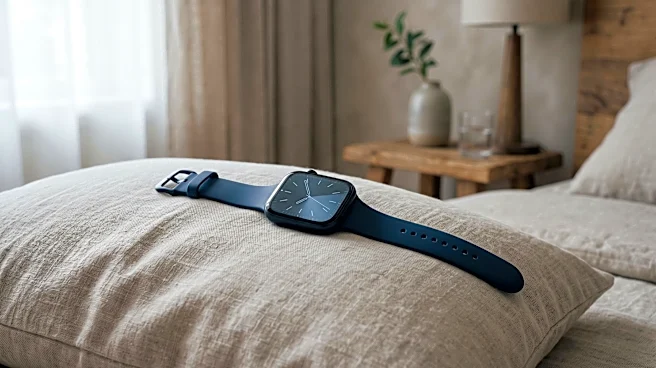
The Luna Band is positioning itself as an alternative to the Fitbit Air by offering AI coaching features without requiring a monthly or annual subscription. While Fitbit Air users need Google Health Premium (formerly Fitbit Premium) for advanced coaching,
personalized insights, and deeper sleep analysis after a three-month trial, Luna Band includes its LifeOS coaching directly with the purchase of the device. The Luna Band, priced at $149, provides daily plans based on sleep and recovery, voice logging for meals and workouts, and micro-apps like Circadian Rhythm and Calorie Tracker. This model contrasts with Fitbit Air's pricing of $99.99 (or $129.99 for a special edition) plus a $9.99 monthly or $99.99 annual subscription for premium AI features.
Why It's Important?
The Luna Band's strategy of offering AI coaching without a subscription challenges the prevalent business model in the wearable technology market, particularly for health and fitness devices. This approach could disrupt the industry by appealing to consumers who are wary of recurring subscription fees, potentially forcing competitors like Fitbit to re-evaluate their pricing structures. For consumers, it offers a more transparent and potentially cost-effective long-term solution for personalized health tracking and coaching. This move also highlights a growing consumer preference for upfront costs over continuous payments, especially for essential features. The competition between these models could drive innovation in both hardware and software, ultimately benefiting users with more feature-rich and affordable options.
What's Next?
The success of Luna Band's no-subscription model could influence other wearable tech companies to explore similar pricing strategies, potentially leading to a broader shift away from subscription-based AI coaching. We might see increased competition in the market for devices that offer comprehensive features without ongoing fees. Fitbit and Google Health Premium may need to enhance their value proposition or adjust their pricing to retain subscribers. Furthermore, this trend could encourage more innovation in hardware design and AI capabilities to justify a one-time purchase price. The market will likely observe how consumers respond to these differing models, which could dictate future trends in wearable technology pricing and feature bundling.
Beyond the Headlines
The debate between subscription-based and one-time purchase models for AI-powered health devices touches upon broader economic and consumer behavior trends. While subscriptions offer continuous revenue for companies and potentially ongoing feature updates, they can also lead to 'subscription fatigue' among consumers. The Luna Band's model taps into a desire for ownership and predictable costs, which could foster greater trust and long-term engagement from users. However, a one-time purchase model might limit the frequency of significant software updates or advanced AI development if not balanced with other revenue streams. This dynamic also raises questions about the perceived value of AI features—are they a core utility that should be included, or a premium service worth an ongoing fee? The answer will likely shape the future of consumer tech pricing.