


What's Happening?
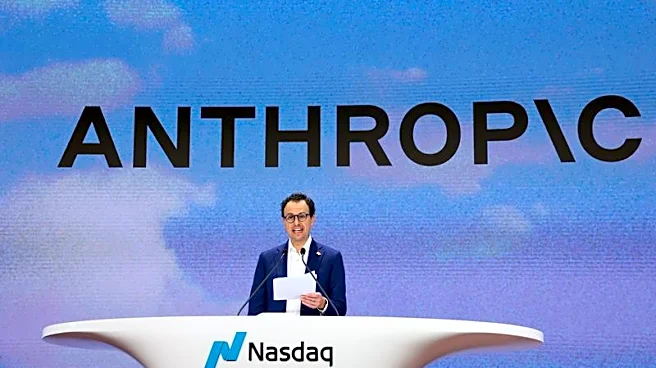
Anthropic, following its recent initial public offering, is focusing on leveraging artificial intelligence (AI) to accelerate drug discovery and potentially cure diseases. The company's IPO prospectus highlights AI's potential to significantly advance
progress in biology and medicine, aiming to treat conditions like cancer, Alzheimer's, heart disease, and rare genetic diseases. Anthropic co-founder and CEO Dario Amodei has expressed optimism about curing most human diseases within 5-10 years. The company has partnered with biotech and pharmaceutical firms, providing access to its Claude Science model, and operates its own AI-powered biology wet lab in San Francisco, which has already made scientific discoveries. Experts believe AI can not only speed up research but also guide it in more effective directions.
Why It's Important?
Anthropic's strategic pivot towards drug discovery with AI signifies a major trend in the biotechnology and pharmaceutical industries. The application of large language models and AI in this field could drastically reduce the time and cost associated with developing new drugs, bringing treatments to market much faster than traditional methods. This has significant implications for public health, offering hope for quicker solutions to long-standing medical challenges. For Anthropic, success in this area could unlock substantial commercial opportunities and generate significant profits, as pharmaceutical companies are willing to invest heavily in technologies that can improve drug efficacy even by a small percentage. This initiative also aims to shift the public narrative around AI towards a more positive light, showcasing its potential for human benefit.
What's Next?
The immediate challenge for Anthropic will be to translate its life sciences research into profitable ventures. While the potential is immense, the path to commercialization in drug discovery can be lengthy and complex. The company will need to demonstrate how its AI models can consistently lead to viable drug candidates and successful clinical trials. Continued partnerships with established pharmaceutical companies like Eli Lilly and Co. will be crucial for validating its technology and integrating it into existing drug development pipelines. The success of Anthropic's AI-powered wet lab in making further scientific discoveries will also be a key indicator of its long-term potential. The industry will be watching to see if Anthropic can deliver on its ambitious claims and revolutionize the drug discovery process.
Beyond the Headlines
Anthropic's venture into AI-driven drug discovery raises profound questions about the future of medicine and the role of technology in healthcare. The promise of curing most human diseases within a decade, while ambitious, underscores the transformative potential of AI. However, it also brings to light ethical considerations regarding the accessibility and affordability of such advanced treatments. If AI can indeed accelerate cures, how will these be distributed globally, and who will bear the costs? Furthermore, the increasing reliance on AI in scientific research could reshape the scientific workforce, requiring new skill sets and potentially altering traditional research methodologies. This development could also lead to a re-evaluation of regulatory frameworks to accommodate the rapid pace of AI-driven innovation in a highly regulated industry like pharmaceuticals.