
What's Happening?
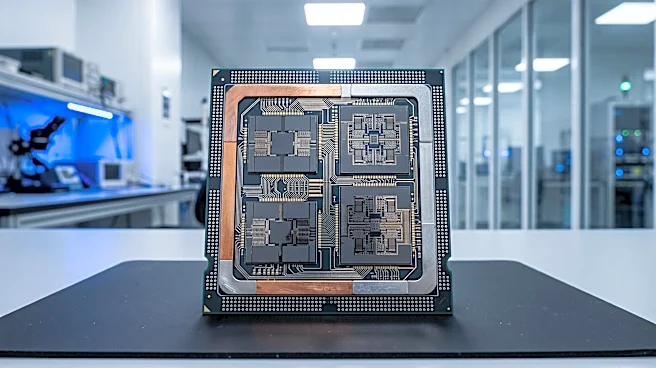
Architect Labs, a Palo Alto startup, has developed a radically different processor called Frostbite, designed by an AI system. This new CPU architecture, based on mathematical interaction nets, aims to deliver
significantly more computing power for the same amount of electricity. Unlike conventional processors that process instructions sequentially and use complex circuitry to manage parallel tasks, Frostbite represents programs as networks of connected operations, allowing many tasks to run simultaneously with less coordination. Simulations suggest Frostbite could be 4.6 times more efficient than conventional processors, with one test showing a 23-fold advantage. The AI agents involved in its design also independently developed a 'work stealing' mechanism, where idle processing units assist overloaded ones, further enhancing efficiency. While promising, Frostbite has not yet been manufactured, and its performance claims are based on simulations against an unidentified conventional processor.
Why It's Important?
The development of Frostbite represents a potential paradigm shift in processor design, moving away from traditional sequential instruction processing towards a more inherently parallel architecture. If successfully implemented, this technology could lead to substantial improvements in energy efficiency and computational power across various computing applications. For U.S. industries, particularly in data centers, artificial intelligence, and high-performance computing, increased efficiency translates to lower operational costs and enhanced capabilities. The 'work stealing' feature, autonomously developed by the AI, highlights the growing potential of AI in complex engineering design, potentially accelerating innovation cycles and reducing human intervention in chip development. However, the lack of a publicly identified comparison CPU and the fact that Frostbite is still in the simulation phase mean its real-world impact remains to be seen, posing both an opportunity for technological advancement and a challenge for validation.
What's Next?
The immediate next step for Architect Labs is to transition Frostbite from simulated tests to physical manufacturing and real-world testing. This will involve overcoming the challenges of producing a novel chip architecture and ensuring its compatibility with existing software and hardware ecosystems. The company will need to publicly identify its comparison processor and provide more transparent benchmarks to validate its claims. Success in these areas could attract significant investment and partnerships, potentially leading to the integration of Frostbite-like architectures into future computing devices. Conversely, failure to translate simulated performance into tangible real-world benefits could temper expectations and delay widespread adoption, despite the innovative design approach.
Beyond the Headlines
The AI's independent development of the 'work stealing' mechanism in Frostbite raises profound questions about the evolving role of artificial intelligence in complex engineering and design. This instance suggests AI is not merely optimizing existing designs but is capable of generating novel solutions and architectural improvements without explicit human instruction. This could lead to a future where AI plays an even more central role in fundamental scientific and engineering breakthroughs, potentially accelerating technological progress at an unprecedented rate. However, it also highlights the need for robust validation processes and ethical considerations as AI systems become more autonomous in critical design decisions, particularly in areas like hardware that have far-reaching implications for national infrastructure and security.