


What's Happening?
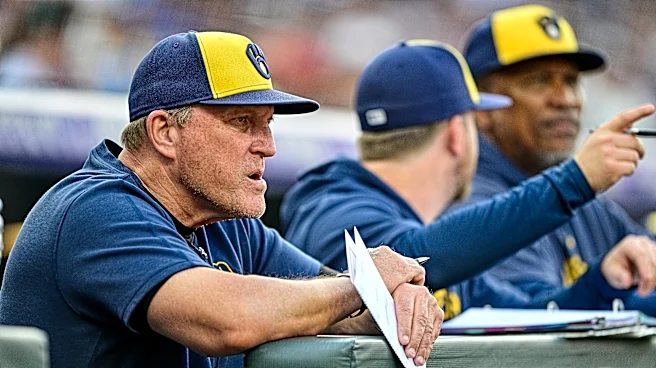
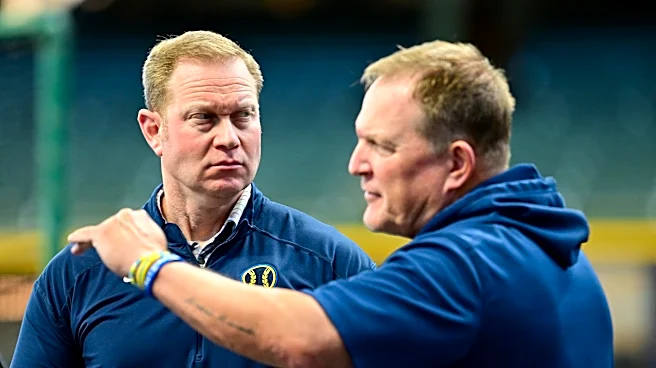
Pat Murphy, the manager of the Milwaukee Brewers, emphasizes mental toughness and a focus on the present as key components of his team's success. Murphy's approach extends to his strategic decisions regarding player matchups, particularly in batting lineups.
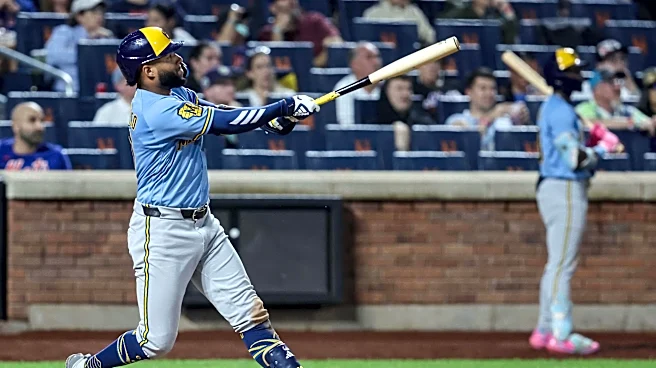
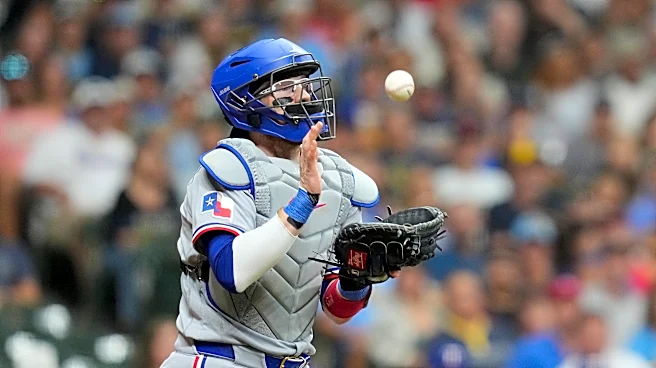
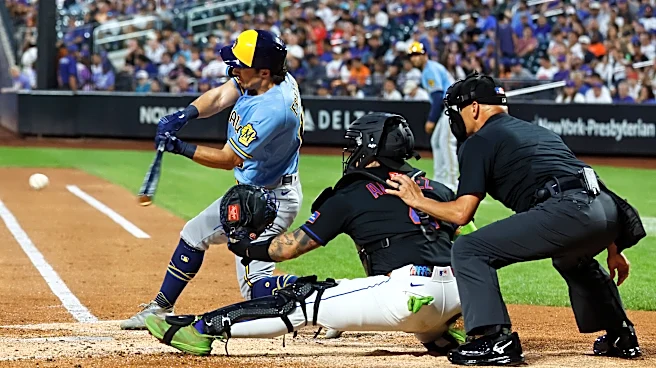
He does not automatically adhere to conventional handedness matchups, instead considering 'reverse splits' where a pitcher's arsenal or a hitter's swing might make an unconventional matchup more favorable. For instance, against left-handed pitchers with specific characteristics like a higher arm slot and straight fastballs, Murphy has opted to start left-handed hitters, such as Christian Yelich, Jake Bauers, Garrett Mitchell, Sal Frelick, and David Hamilton. This strategy was evident in a recent game against Texas Rangers southpaw Cody Bradford, who exhibits reverse splits, meaning left-handed hitters perform better against him. Murphy also recognized that his left-handed hitters were better positioned to bunt for hits against Bradford due to the pitcher's delivery mechanics. This unconventional approach led to significant offensive production for the Brewers, contributing to their status as one of baseball's most successful regular-season teams for the second consecutive year.
Why It's Important?
Pat Murphy's management philosophy highlights a growing trend in professional sports where data-driven analysis and psychological conditioning are integrated into coaching strategies. His willingness to deviate from traditional baseball wisdom, such as strictly adhering to handedness matchups, demonstrates an adaptive and analytical approach to game management. This is important for the U.S. sports industry as it showcases how advanced analytics and a deeper understanding of individual player and pitcher mechanics can lead to competitive advantages. By focusing on mental toughness, Murphy aims to create a resilient team that can perform under pressure, a critical factor in high-stakes professional sports. The success of the Brewers under his leadership could influence other teams to re-evaluate their own strategic norms, potentially leading to more innovative and less conventional tactical decisions across Major League Baseball. This approach not only impacts game outcomes but also shapes player development and team culture, emphasizing adaptability and a nuanced understanding of performance metrics.
What's Next?
The Milwaukee Brewers, under Pat Murphy's leadership, are expected to continue their strategic and mentally focused approach as they progress through the season and potentially into the postseason. Their ongoing success will likely serve as a case study for other MLB teams, prompting further examination of traditional baseball strategies versus data-informed, unconventional tactics. As the season advances, observers will be watching to see if Murphy's emphasis on mental toughness and 'reverse splits' continues to yield positive results, especially in high-pressure playoff scenarios. The Brewers' performance could influence future managerial hires and coaching philosophies across the league, potentially leading to a broader shift towards more analytical and psychologically integrated approaches to team management. Continued success could also solidify Murphy's reputation as a pioneering manager, further embedding his methods into the discourse of modern baseball strategy.
Beyond the Headlines
Pat Murphy's management style extends beyond mere tactical decisions; it delves into the psychological and cultural aspects of team building. His emphasis on mental toughness suggests a recognition that athletic performance is not solely physical but deeply intertwined with psychological resilience and focus. This approach has broader implications for leadership in high-performance environments, including business and other competitive fields, where fostering a strong mental game can be as crucial as technical skill. By challenging conventional wisdom in baseball, Murphy also highlights the importance of critical thinking and adaptability in any domain. His willingness to experiment with 'reverse splits' and other non-traditional strategies encourages a culture of innovation and continuous learning, demonstrating that established norms should always be open to re-evaluation based on new data and insights. This philosophical underpinning of his management could inspire a more holistic view of success, where mental fortitude and strategic flexibility are valued alongside raw talent.