



What's Happening?
Two Bitcoin (BTC) wallets, which had been dormant for over 16 years since their creation in September 2010, have recently become active. According to on-chain monitoring service TradingBeats, these wallets transferred a combined total of 100 BTC to a new
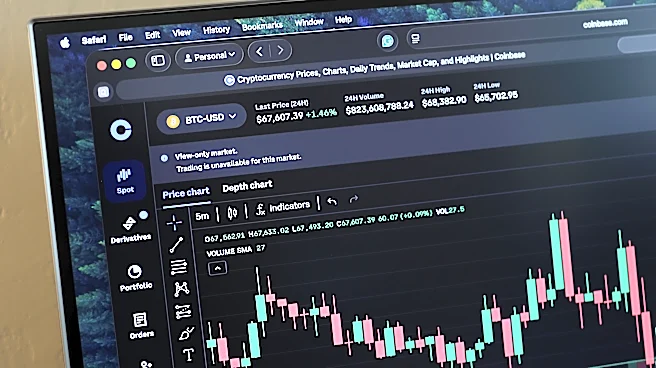
address. The first wallet mined 50 BTC on September 8, 2010, and the second mined another 50 BTC on September 19, 2010. At the time of mining, the combined market value of these 100 BTC was approximately $6. With Bitcoin currently trading at around $69,000, the transferred assets are now worth approximately $6.9 million, representing an estimated 1.15-million-fold increase in dollar-denominated market value. The movement of these long-untouched coins has drawn significant attention within the cryptocurrency community, sparking discussions about potential selling pressure or changes in custody arrangements by early Bitcoin holders.
Why It's Important?
The reactivation and transfer of Bitcoin from such old, dormant wallets hold significant importance for the U.S. cryptocurrency market and its participants. Firstly, it highlights the immense long-term value appreciation of Bitcoin, showcasing the potential for early investors. This event can influence market sentiment, potentially encouraging new investments or reinforcing the belief in Bitcoin's store-of-value proposition. Secondly, the movement of a substantial amount of BTC from a long-inactive wallet often leads to speculation about potential selling pressure. While a transfer to a new address does not automatically imply a sale, market participants closely monitor such movements for their potential impact on Bitcoin's price stability. Lastly, these events serve as a reminder of the early days of Bitcoin mining, when block rewards were significantly higher (50 BTC per block compared to the current 3.125 BTC after the fourth halving in April 2024), underscoring the evolution of the cryptocurrency's economic model and distribution.
What's Next?
The cryptocurrency community will likely continue to monitor the new address to which the 100 BTC was transferred for any subsequent movements. If the Bitcoin is moved to an exchange, it could signal an intent to sell, potentially leading to short-term price fluctuations. Conversely, if the funds remain in the new wallet or are moved to other non-exchange addresses, it might indicate a change in security measures, custody arrangements, or a long-term holding strategy by the owner. The identities of the individuals behind these wallets and their intentions remain unknown, adding an element of mystery to the situation. This event may also prompt increased scrutiny of other long-dormant wallets, as market participants try to anticipate similar movements that could impact the supply and demand dynamics of Bitcoin.
Beyond the Headlines
The movement of these ancient Bitcoin holdings touches upon several deeper implications. It underscores the concept of digital scarcity and the 'hodling' phenomenon, where early adopters held onto their assets for over a decade, witnessing extraordinary wealth creation. This event also reignites discussions within the cryptocurrency community about the potential involvement of Satoshi Nakamoto, Bitcoin's anonymous creator, or other early developers, although the source explicitly states that the age of these wallets does not establish any direct connection to Nakamoto, as many individuals mined Bitcoin in its nascent stages. Furthermore, it highlights the challenges and opportunities associated with long-term digital asset custody, including security practices and the potential for lost or inaccessible funds. The sheer magnitude of the value increase also raises questions about wealth distribution in the digital age and the impact of early adoption on economic disparities.