

What's Happening?
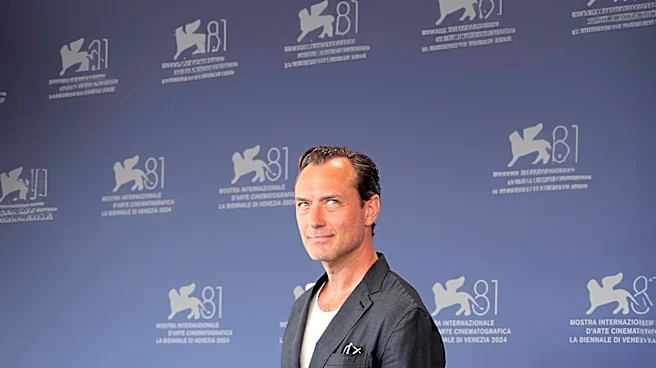
Alberto Barbera, the artistic director of the Venice Film Festival, has publicly defended the inclusion of Russian filmmaker Ilya Khrzhanovsky’s film 'DAU' in this year's festival lineup. This defense comes in response to significant criticism from the Ukrainian
Ministry of Foreign Affairs, the Ministry of Culture, and the Ukrainian Embassy in Italy. The Ukrainian entities argue that featuring a project linked to the Russian state and its networks of influence sends a deeply concerning signal, especially given the ongoing conflict in Ukraine. They highlighted that the film's main actor, Teodor Currentzis, received Russian citizenship from Vladimir Putin, and his musical career was funded by Russian banks. Additionally, the film 'DAU' was reportedly funded by Russian businessman Sergei Adoniev, who has been sanctioned by the U.S. and Ukraine. Barbera, however, asserts that 'DAU' is not a Russian film nor pro-Putin propaganda, but rather a work that critiques totalitarian regimes and their infringement on individual freedoms. He described Khrzhanovsky as a Russian dissident who has taken a stand against the Russian invasion of Ukraine.
Why It's Important?
This controversy underscores the complex intersection of art, politics, and international relations, particularly in the context of global conflicts. The Venice Film Festival, as a prominent international cultural event, faces pressure to navigate geopolitical sensitivities while upholding artistic freedom. The backlash highlights the ongoing efforts by Ukraine to isolate Russia culturally and economically on the global stage. For the U.S. and its allies, this situation reflects the broader challenge of maintaining a unified stance against Russian aggression, even in cultural domains. The debate also raises questions about the responsibility of cultural institutions to consider the political implications of their selections and whether artistic expression should be entirely divorced from the actions of states or individuals associated with them. The involvement of individuals sanctioned by the U.S. further complicates the narrative, drawing attention to the reach and impact of such sanctions beyond direct economic measures.
What's Next?
The Venice Film Festival is expected to proceed with the screening of 'DAU' as planned, despite the ongoing criticism. Barbera's firm stance suggests that the festival intends to prioritize its artistic autonomy and freedom of expression. However, the controversy may lead to continued protests or boycotts from various groups, potentially impacting the festival's public image and attendance. This incident could also prompt other international film festivals and cultural organizations to re-evaluate their policies regarding films or artists from countries involved in geopolitical conflicts. The Ukrainian government and its allies are likely to continue their advocacy efforts to pressure cultural institutions to align with their stance against Russia. The debate surrounding 'DAU' may also spark broader discussions within the film industry about the ethical considerations of funding sources and the political affiliations of artists and their projects.
Beyond the Headlines
The 'DAU' controversy delves into deeper questions about the nature of dissent and propaganda in authoritarian contexts. Barbera's characterization of Khrzhanovsky as a Russian dissident challenges the simplistic categorization of all Russian-associated art as pro-state propaganda. This distinction is crucial for understanding the nuances of artistic expression under repressive regimes and the potential for art to serve as a vehicle for critique. The debate also touches upon the historical role of cultural events like the Venice Biennale in fostering dialogue and challenging political narratives. The accusations of 'smear campaigns' and 'manipulation of reality' from both sides highlight the weaponization of information and public perception in contemporary conflicts. Ultimately, this event forces a re-examination of the boundaries of artistic freedom, the political responsibilities of cultural institutions, and the complex relationship between art, artists, and the states they originate from, especially when those states are engaged in international conflicts.