







What's Happening?
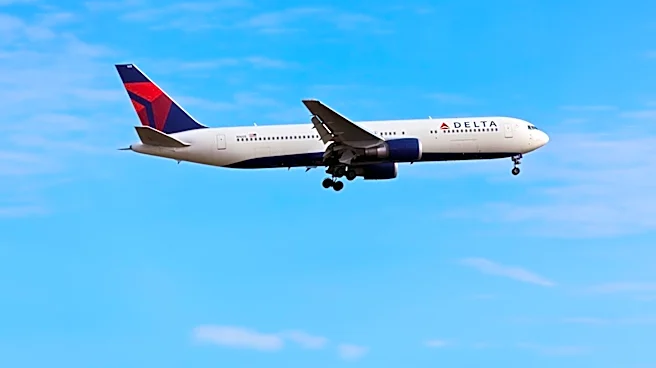
Delta Air Lines flight attendants may soon have the opportunity to vote on union representation, according to Sara Nelson, president of the Association of Flight Attendants (AFA). Nelson stated on November 12, during an interview at the Skift Aviation
Forum in New York, that the union is likely on the verge of securing the right to hold an election. This development follows several years of organizing efforts by the AFA at Delta. Nelson expressed confidence in the campaign's progress, anticipating a positive outcome in the new year. The ability to hold an election is a critical step toward potential labor representation for Delta's flight attendants, a significant shift for the airline which has largely remained non-unionized in certain employee groups compared to its major competitors.
Why It's Important?
The potential unionization of Delta Air Lines flight attendants carries significant implications for both the airline industry and labor relations. Delta has historically maintained a largely non-union workforce among its flight attendants, distinguishing it from competitors like United and American Airlines, where flight attendants are unionized. A successful unionization effort at Delta could lead to changes in compensation, benefits, and working conditions for its flight attendants, potentially setting new industry standards or influencing collective bargaining agreements at other airlines. For Delta, it could introduce new complexities in labor negotiations and operational management. For the broader labor movement, a victory at a prominent non-union company like Delta would represent a significant win, potentially energizing organizing efforts in other sectors and companies.
What's Next?
The immediate next step will be the formal announcement and scheduling of a union election, should the AFA secure the necessary support and regulatory approval. If an election is held, both the AFA and Delta Air Lines are expected to intensify their campaigns to influence flight attendants' votes. The AFA will likely highlight the benefits of union representation, such as improved job security, better pay, and enhanced working conditions. Delta, on the other hand, may emphasize its existing employee benefits and direct communication channels, arguing against the need for third-party representation. The outcome of such an election would either solidify Delta's non-union status for this employee group or usher in a new era of collective bargaining for its flight attendants, potentially leading to contract negotiations and new labor agreements.
Beyond the Headlines
Beyond the immediate impact on Delta's flight attendants, a successful unionization drive could have ripple effects across the airline industry and corporate America. It could embolden other non-unionized workforces within the aviation sector and beyond to pursue similar organizing efforts, particularly in industries where labor has historically faced challenges in gaining representation. This development also highlights the ongoing tension between corporate management's desire for direct employee relations and labor unions' push for collective bargaining power. The outcome at Delta could be seen as a barometer for the current climate of labor relations in the U.S., reflecting broader trends in worker sentiment regarding wages, benefits, and workplace protections in a post-pandemic economic environment.