







What's Happening?
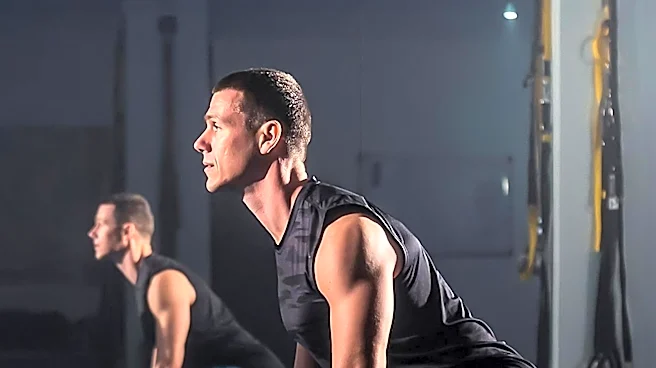
Olivier Richters, known as 'The Dutch Giant,' shares insights into his bodybuilding journey and training regimen in a video featured by Men's Health. Over 15 years, Richters increased his weight from 80 to 160 kilograms through various training methods.
Initially, he followed a full-body workout routine, which evolved into a split routine targeting different muscle groups on different days. Despite initial success, he faced a plateau in growth, prompting him to seek advice from a top bodybuilding coach in Holland. The coach advised him to reduce his training volume, emphasizing the importance of recovery. Richters adopted a new approach, focusing on fewer sets but pushing each set to failure multiple times. This method allowed him to maintain his muscle mass while reducing gym time. Richters also balanced his bodybuilding with stunt training, maintaining his physique with only 30% of his usual training volume during intense filming periods.
Why It's Important?
Richters' experience highlights the importance of adapting training strategies to overcome plateaus in bodybuilding. His journey underscores the significance of recovery and the potential benefits of reducing training volume to enhance muscle growth. This approach challenges the common belief that more training always leads to better results. For fitness enthusiasts and bodybuilders, Richters' story offers valuable insights into optimizing training efficiency and maintaining muscle mass with less time commitment. His success in balancing bodybuilding with a demanding film career also illustrates the potential for integrating fitness with other professional pursuits, providing a model for those seeking to maintain physical health alongside career demands.
What's Next?
Richters continues to share his fitness journey and insights through his YouTube channel, 'The Dutch Giant.' As he balances his bodybuilding career with roles in the film industry, he may explore further adaptations to his training regimen to accommodate new challenges. His experiences could influence other bodybuilders and fitness enthusiasts to reconsider their training strategies, potentially leading to broader discussions on the role of recovery and training volume in muscle growth. Additionally, Richters' public sharing of his journey may inspire others to pursue fitness goals while managing professional commitments.
Beyond the Headlines
Richters' story raises questions about the sustainability of traditional bodybuilding practices and the potential for innovative training methods to improve results. His emphasis on recovery and reduced training volume could prompt a reevaluation of common fitness industry norms, encouraging a shift towards more personalized and efficient workout plans. This approach may also have implications for the broader fitness community, promoting a more balanced perspective on health and wellness that prioritizes long-term sustainability over short-term gains.