




What's Happening?
India and Brazil have signed a memorandum of understanding (MOU) to significantly expand bilateral trade, aiming to reach $20 billion by 2030. This agreement, sealed in August 2026 between the Brazilian Trade and Investment Promotion Agency (ApexBrasil)
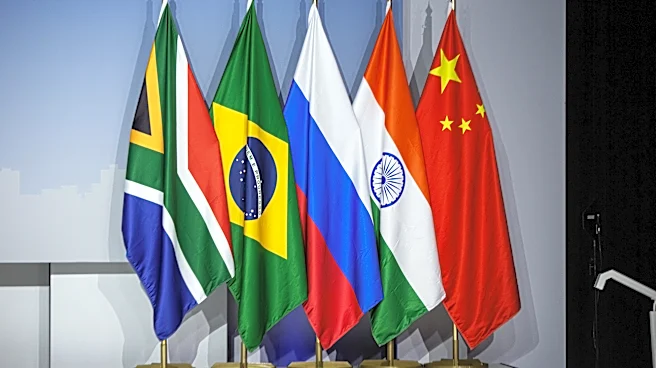
and the Confederation of Indian Industry (CII), focuses on fostering business opportunities and investment between the two nations. The pact targets strategic sectors including critical minerals, healthcare, energy, and agriculture. Both countries are key members of the BRICS bloc, and this initiative reflects a broader trend among emerging economies to strengthen economic ties and reduce reliance on traditional markets. The agreement is not a free trade agreement and does not create legal obligations, but rather sets a roadmap and expresses a political will to grow trade relations.
Why It's Important?
This agreement is important as it signifies a strategic move by two major emerging economies to deepen their economic partnership and diversify global trade relationships. For the U.S., this development highlights the ongoing shift in global economic power dynamics, with countries in the Global South increasingly forging stronger alliances. While not directly impacting U.S. trade, the increased economic integration between India and Brazil could lead to new supply chain configurations and potentially alter competitive landscapes in sectors like pharmaceuticals, energy, and agriculture. The focus on critical minerals also has implications for global resource markets, where the U.S. has significant interests. This collaboration underscores a broader trend of nations seeking to reduce dependence on established economic powers, which could influence future trade policies and diplomatic engagements.
What's Next?
The success of this agreement will depend on the materialization of specific deals and investments between Indian and Brazilian companies. Both governments will likely work to facilitate these opportunities, potentially through trade missions, investment forums, and policy adjustments that support the identified growth sectors. Stakeholders in both countries, including businesses and industry associations, will be crucial in driving the actual trade volume towards the $20 billion target. The agreement's non-binding nature means its effectiveness will be measured by the tangible outcomes in trade and investment rather than legal enforcement. Future discussions within the BRICS bloc may also be influenced by the progress of this bilateral initiative, potentially inspiring similar agreements among other member states.
Beyond the Headlines
Beyond the immediate trade targets, this agreement reflects a deeper geopolitical and economic realignment. As members of the BRICS bloc, India and Brazil are actively participating in reshaping the global economic order, moving towards a more multipolar system. This push for greater economic autonomy and diversification of partners can be seen as a response to global trade tensions and the desire to build resilience against external economic pressures. The emphasis on sectors like critical minerals and bioenergy also points to a strategic focus on future-oriented industries, which could have long-term implications for technological development and resource security. This collaboration could also serve as a model for other developing nations seeking to enhance their economic standing through South-South cooperation, potentially leading to a more interconnected and diversified global economy.