






What's Happening?
Rivian, a U.S. electric vehicle startup, is expanding its product lineup despite challenges in the EV market. The company plans to introduce the midsized R2 SUV and two new affordable EVs, the R3 and 3X, targeting mass-market consumers. This expansion
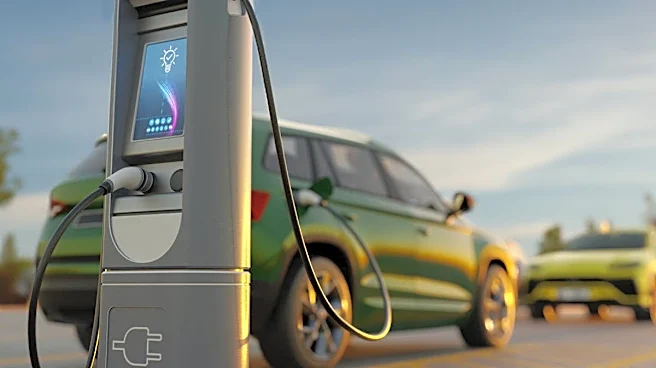
comes as the federal $7,500 tax credit for EVs expired, impacting sales. However, Rivian remains optimistic, leveraging its partnership with ChargeScape to offer vehicle-to-grid (V2G) services, allowing EVs to act as mobile energy storage units. This partnership aims to provide Rivian drivers with utility-based savings plans, enhancing the appeal of their vehicles.
Why It's Important?
Rivian's expansion and strategic partnerships highlight the evolving landscape of the EV market, where companies must adapt to changing policies and consumer demands. By focusing on affordable EVs and V2G technology, Rivian is positioning itself to attract a broader customer base, including those interested in sustainable energy solutions. The company's efforts to enhance public charging infrastructure and offer utility incentives could address key barriers to EV adoption, such as charging accessibility and cost. Rivian's approach may influence other automakers to adopt similar strategies, potentially accelerating the transition to electric mobility.
What's Next?
Rivian's next steps involve ramping up production of its new EV models and expanding its V2G services through ChargeScape. The company will need to navigate potential challenges related to manufacturing and supply chain logistics, especially as it plans to build a new factory in Georgia. The outcome of upcoming elections in Georgia could impact Rivian's expansion plans, depending on the political climate and support for electrification initiatives. Additionally, Rivian's success in the market will depend on its ability to compete with established players like Tesla and adapt to evolving consumer preferences.