




What's Happening?
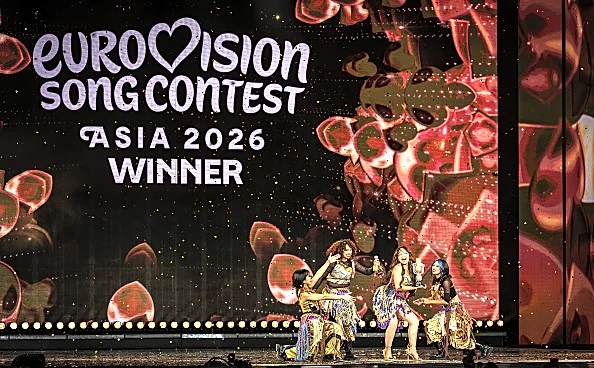
The Philippines' 19-year-old pop singer Carmelle won the first Eurovision Song Contest Asia in Bangkok with her song “Sobra-Sobra” (Too Much), a tribute to strong women. The event, held on November 14, 2026, saw Thailand finish second, followed by Vietnam,
Malaysia, and Laos. Eleven countries participated in the contest, which organizers hope will expand the Eurovision brand in Asia. This inaugural Asian edition comes as the European Eurovision contest faces significant controversy, with viewership down by 35 million after five countries boycotted the 2026 event due to Israel's participation. Organizers of the Asia show, however, state that this controversy is unrelated to their expansion efforts, noting that Eurovision has sought to grow for years, including a failed U.S. version in 2022. Major Asian nations like India, Japan, and China did not participate in this first edition, but organizers aim to include them in future contests.
Why It's Important?
The launch of Eurovision Asia signifies a strategic effort to expand a globally recognized entertainment brand into the world's most populous region. While the European contest grapples with political boycotts and declining viewership, the Asian expansion attempts to tap into new markets and audiences, potentially revitalizing the brand's global presence. The success of the Asian edition could pave the way for similar regional contests, diversifying Eurovision's revenue streams and cultural impact. However, the absence of major economic and cultural powerhouses like India, Japan, and China in the inaugural event highlights the challenge of establishing the brand in a region already rich with its own music shows. The controversy surrounding Israel's participation in the European contest underscores the increasing politicization of international cultural events, which could influence future participation and viewership across all Eurovision franchises.
What's Next?
Organizers of Eurovision Asia plan to continue building the brand in the region, with Martin Green, director of the European Broadcasting Union, estimating it could take two to five years to establish a strong foothold. Efforts will likely focus on attracting more participating countries, particularly major players like India, Japan, and China, to increase viewership and commercial viability. The format and appeal of the Asian contest, which was organized by commercial television rather than national broadcasters, may evolve as organizers assess its initial reception. Meanwhile, the European Broadcasting Union will need to navigate the ongoing political tensions and boycotts affecting its main European contest, which could indirectly influence perceptions of the Eurovision brand globally, including in Asia. The success of future editions will depend on sustained interest from both participants and audiences, as well as the ability to adapt to regional tastes and market dynamics.
Beyond the Headlines
The expansion of Eurovision into Asia reflects a broader trend of global entertainment franchises seeking growth in emerging markets, often adapting their formats to local contexts. The contrast between the politically charged European contest and the commercially driven Asian version highlights the different challenges and opportunities in global cultural exchange. While the European contest grapples with geopolitical issues and human rights concerns, the Asian edition focuses on entertainment and brand building. This divergence could lead to two distinct identities for Eurovision: one as a platform for political expression and another as a purely commercial music spectacle. The long-term success of Eurovision Asia will also depend on its ability to integrate with existing Asian music industries and cultural landscapes, which are already vibrant and diverse. The attempt to establish a Western-originated entertainment format in Asia also raises questions about cultural assimilation and the potential for new hybrid forms of global entertainment.