



What's Happening?
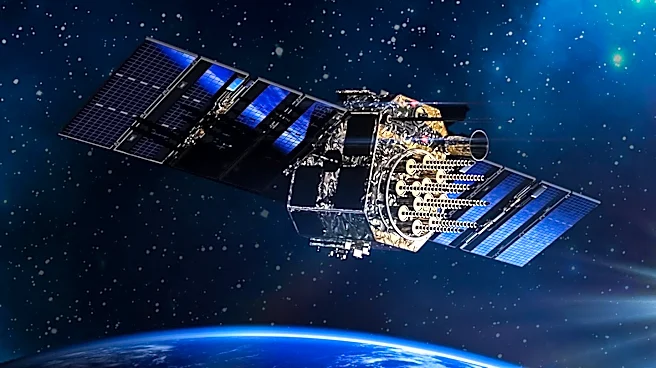
Amazon Leo has filed an application with the U.S. Federal Communications Commission (FCC) to launch and operate a Direct-to-Device (D2D) satellite system. This system will consist of up to 5,105 low Earth orbit satellites, aimed at providing global D2D connectivity.
The deployment is scheduled to begin in 2028. This move follows Amazon's merger with Globalstar, which will allow Amazon to incorporate Globalstar's satellite operations and infrastructure into its network. The D2D system is designed to work alongside Amazon Leo's existing satellite broadband systems and Globalstar's constellations, extending connectivity directly to mobile devices. The system will support various applications, including disaster response, global fleet management, and IoT connectivity. Amazon Leo has also announced a partnership with Apple to provide satellite services for iPhone and Apple Watch models.
Why It's Important?
The launch of Amazon Leo's D2D system represents a significant advancement in satellite technology, potentially transforming global connectivity. By providing direct satellite connections to mobile devices, Amazon Leo aims to fill coverage gaps in areas where traditional networks are impractical or costly. This could have substantial implications for industries reliant on remote operations, such as logistics and emergency services. The partnership with Apple suggests a strategic move to integrate satellite connectivity into consumer electronics, potentially setting a new standard for mobile communication. The system's ability to maintain communication during disasters or network outages could enhance public safety and emergency response capabilities.
What's Next?
Amazon Leo plans to distribute its D2D satellites across five orbital shells, each optimized for different global regions. The satellites will use advanced technologies like digital beamforming and optical inter-satellite links to enhance performance and efficiency. As the deployment progresses, Amazon Leo is likely to seek additional partnerships with telecom operators to expand its service reach. The FCC's decision on the application will be a critical next step, potentially influencing the timeline and scope of the project. Stakeholders in the telecommunications and technology sectors will be closely monitoring these developments, as they could reshape competitive dynamics and service offerings.