






What's Happening?
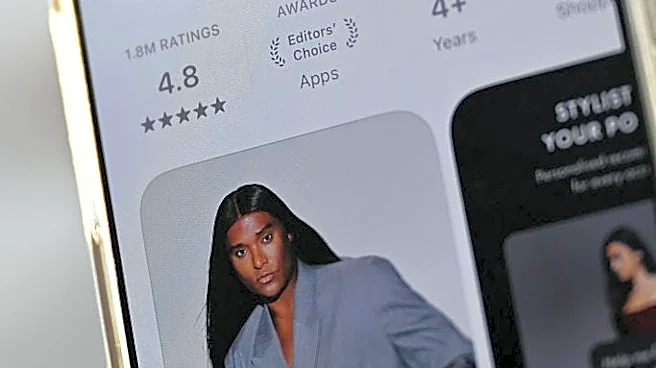
U.K. fashion retail giant Asos has confirmed a data breach affecting its customers' personal information. The breach was revealed after hackers used the company's own app to send unauthorized notifications to users, informing them that Asos had been compromised.
Asos stated in a filing with the London Stock Exchange that the hackers gained access to a third-party platform used by the company for customer communication. The stolen data includes names, contact information, home addresses, phone numbers, email addresses, and notes related to customer profiles, such as website search queries. The hackers, identifying themselves as Xuanye Group, claimed to have "fully compromised" Asos's data hosted on Snowflake, a tech company specializing in data analysis. They issued a threat to leak the data if Asos did not engage with them.
Why It's Important?
This data breach is significant due to the sensitive nature of the compromised customer information, including home addresses and search queries, which could be used for targeted phishing attacks or other malicious activities. The method of using the company's own app to notify customers adds a layer of sophistication and urgency, putting direct pressure on Asos to respond. For U.S. consumers who shop with international retailers like Asos, this incident highlights the global interconnectedness of data security risks. It underscores the importance of robust cybersecurity measures for companies utilizing third-party data platforms and the potential vulnerabilities associated with such integrations. The incident also raises concerns about the security of customer communication channels and the need for multi-factor authentication to prevent unauthorized access.
What's Next?
Asos will likely focus on mitigating the impact of the breach, which includes notifying affected customers, enhancing its cybersecurity protocols, and investigating how the hackers gained access to its systems and the in-app notification mechanism. The company will also need to address the demands of the Xuanye Group, though it is generally advised not to negotiate with hackers. Customers who received the rogue notification or are concerned about their data should monitor their accounts for suspicious activity and consider changing passwords. Regulatory bodies in both the U.K. and potentially the U.S. may launch investigations into the incident, which could result in fines or stricter data protection requirements for Asos and other companies handling sensitive customer data.
Beyond the Headlines
This incident highlights several deeper implications for the broader digital economy. Firstly, it exposes the vulnerabilities inherent in relying on third-party platforms for data storage and customer communication, emphasizing the need for rigorous vendor security assessments. Secondly, the use of a company's own app for a breach notification, even if unauthorized, could erode customer trust and create confusion about legitimate communications. This could lead to increased skepticism towards official notifications in the future. Thirdly, the incident underscores the evolving tactics of cybercriminals, who are increasingly employing direct pressure tactics to extort companies. This necessitates a re-evaluation of incident response strategies to include scenarios where hackers directly engage with customers. Finally, the breach serves as a reminder of the ongoing challenge of securing vast amounts of personal data in an increasingly interconnected digital world, impacting consumer privacy and corporate responsibility.