






What's Happening?
The Lord of the Rings, a multimedia franchise based on J.R.R. Tolkien's book series, which began in 1954 with 'The Fellowship of the Ring,' is experiencing continued expansion and mainstream popularity. This enduring fantasy saga has been notably propelled
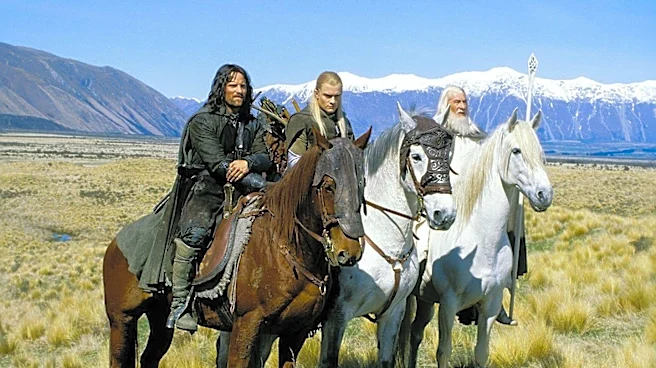
by Peter Jackson's acclaimed film trilogies, including 'The Lord of the Rings: The Fellowship of the Ring,' 'The Lord of the Rings: The Two Towers,' and 'The Lord of the Rings: The Return of the King.' Beyond the cinematic adaptations, the franchise has also ventured into television with Amazon's 'The Lord of the Rings: The Rings of Power.' The universe of Middle-earth further extends into tabletop role-playing games, with publications by Free League Publishing and Cubicle 7. This multi-platform presence demonstrates the franchise's ongoing relevance and its ability to captivate new audiences through various forms of media.
Why It's Important?
The sustained growth and diversification of 'The Lord of the Rings' franchise across film, television, and gaming platforms highlight the significant economic and cultural impact of established intellectual properties in the entertainment industry. The success of Peter Jackson's film trilogies set a precedent for epic fantasy adaptations, influencing subsequent productions and demonstrating the commercial viability of large-scale fantasy narratives. Amazon's investment in 'The Rings of Power' series underscores the high demand for premium streaming content and the strategic value of iconic franchises in attracting and retaining subscribers. Furthermore, the continued development of tabletop RPGs indicates a robust market for immersive, interactive experiences that complement passive consumption of media, fostering a dedicated fan base and creating diverse revenue streams. This trend showcases how a well-managed franchise can generate substantial economic activity and maintain cultural resonance over decades.
What's Next?
The ongoing success of 'The Lord of the Rings' franchise suggests a continued focus on expanding its universe through various media. Future developments could include additional seasons of 'The Rings of Power,' further film adaptations exploring different eras or characters within Middle-earth, or even new video game titles that delve deeper into Tolkien's lore. The franchise's ability to adapt to evolving consumption habits, from theatrical releases to streaming and interactive gaming, indicates a strategic approach to long-term growth. Stakeholders, including Amazon and other licensees, are likely to continue investing in content that leverages the brand's global recognition and dedicated fan base. This sustained investment aims to capitalize on the enduring appeal of Middle-earth, ensuring its presence across multiple entertainment sectors for years to come.
Beyond the Headlines
The enduring appeal of 'The Lord of the Rings' extends beyond mere entertainment, touching upon deeper cultural and ethical dimensions. J.R.R. Tolkien's original works are celebrated for their intricate world-building, profound themes of good versus evil, courage, sacrifice, and the corrupting influence of power. These narratives resonate with audiences globally, offering allegories that remain relevant in contemporary society. The franchise's multimedia adaptations introduce these complex themes to new generations, fostering discussions on morality, environmentalism, and the nature of heroism. The community built around Middle-earth, from avid readers to role-playing enthusiasts, demonstrates the power of shared fictional universes to create lasting cultural impact and provide a framework for exploring universal human experiences. This cultural phenomenon highlights how fantasy literature can serve as a powerful vehicle for ethical reflection and community building.