




What's Happening?
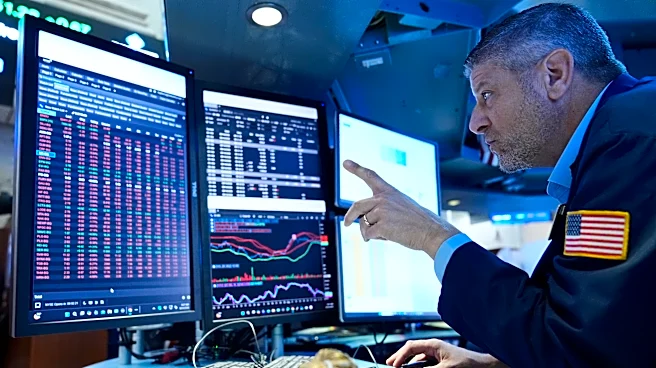
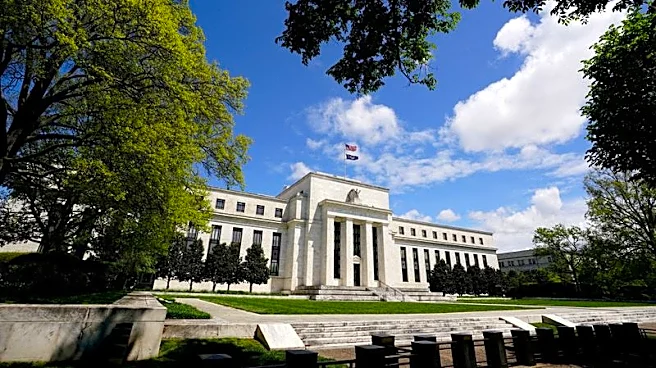
Analysts are suggesting that a potential interest rate hike by the Federal Reserve, expected this week, could lead to a 'bullish shock' for the stock market, contrary to typical reactions. The market has largely priced in a 25 basis point hike, with odds
climbing to 92% in recent days. This would mark the first rate increase in three years. Veteran economist Henrik Zeberg and Citi Research's head of US equity strategy, Scott Chronert, both believe a hike could be positive for stocks in the short term. Zeberg noted in a Substack publication that yields could fall, boosting risk assets. Chronert suggested a pre-emptive move by the Fed could anchor the longer end of the bond curve, alleviating short-term uncertainty. The S&P 500, Dow Jones Industrial Average, and Nasdaq 100 have all seen declines over the last month, with the 10-year government bond yield recently surpassing 5%.
Why It's Important?
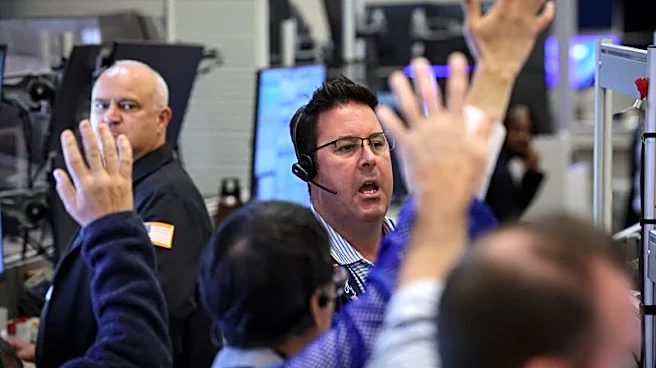
This perspective challenges the conventional wisdom that interest rate hikes negatively impact stock markets by tightening financial conditions. If a Fed hike is indeed perceived as a move to seriously address inflation and calm long-end bond yields, it could restore investor confidence and lead to a market rally. The recent volatility, with major indexes slipping below their 50-day moving averages and the 10-year Treasury yield hitting a 2007 high, indicates significant investor anxiety. A 'bullish shock' would signal a potential shift in market sentiment, suggesting that investors might view the Fed's action as a necessary step towards economic stability rather than a restrictive measure. This could benefit equities by reducing the attractiveness of bonds and encouraging a return to risk assets, impacting a broad range of U.S. industries and economic stakeholders.
What's Next?
The immediate focus will be on the Federal Reserve's policy meeting and the announcement regarding interest rates. Should the Fed proceed with a rate hike, market participants will closely monitor bond yields, particularly the long-end of the curve, to see if they stabilize as predicted by some analysts. The reaction of the S&P 500, Dow Jones Industrial Average, and Nasdaq 100 in the days following the announcement will be crucial in determining if the 'bullish shock' scenario materializes. Investors will also be looking for any forward guidance from the Fed on future monetary policy, which could further influence market direction. The outcome will likely shape short-term investment strategies across various sectors, with potential implications for corporate earnings and consumer spending.
Beyond the Headlines
The discussion around a 'bullish shock' from a Fed rate hike highlights a deeper evolution in market psychology and economic interpretation. It suggests that in certain highly anticipated scenarios, the market's reaction can be counter-intuitive, driven by the perceived clarity and commitment of central bank policy rather than just the immediate impact of higher borrowing costs. This could indicate a growing maturity in how markets process information, where certainty, even if it involves a rate hike, is preferred over prolonged ambiguity. Furthermore, the emphasis on calming long-end bond yields points to underlying concerns about the U.S.'s fiscal health and inflation, suggesting that the market is seeking reassurance that these fundamental issues are being addressed, even if it means short-term adjustments. This shift could influence future investment paradigms, prioritizing stability and clear policy signals.