








What's Happening?
Home Depot has provided $1.235 million in relief to 286 Connecticut customers affected by the bankruptcy of Wren Kitchens. Attorney General William Tong announced this assistance following Wren Kitchens' bankruptcy filing on April 24, which left many
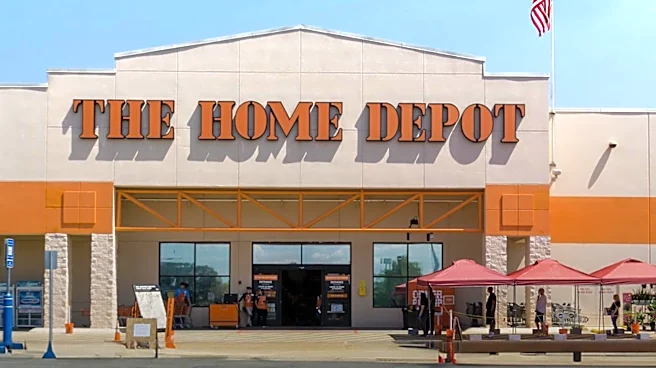
customers with unfinished kitchen renovations and undelivered products. Wren Kitchens operated 10 showrooms within Home Depot stores across Connecticut, including locations in Stamford, Norwalk, Fairfield, Waterbury, and Enfield. Following Wren's closure, the Office of the Attorney General contacted Home Depot to request assistance for the impacted consumers. Home Depot voluntarily stepped in to help, even though Wren Kitchens was an independently operated entity. The assistance includes $303,000 in credit card chargebacks facilitated by Home Depot, and $932,000 in payments via gift cards or checks for customers who received only partial orders. Additionally, Home Depot is offering discounts and financing options at stores that hosted Wren showrooms, such as 30% off special-order cabinets, 5% off special-order countertops, and three-year no-interest financing. Home Depot will continue to offer help to Connecticut customers through October 31.
Why It's Important?
This action by Home Depot is significant as it demonstrates a voluntary commitment to customer satisfaction and brand reputation, even when not legally obligated. The bankruptcy of Wren Kitchens created a substantial problem for hundreds of Connecticut residents, many of whom had invested significant funds into kitchen renovations. By stepping in, Home Depot is mitigating financial losses and stress for these consumers, which can foster goodwill and trust among its customer base. This move also highlights the potential risks for retailers who host third-party vendors within their premises, as the failure of such vendors can indirectly impact the host's reputation. The intervention by the Attorney General's office underscores the role of state consumer protection agencies in advocating for residents when businesses fail. This relief effort helps to stabilize the financial situations of affected families and ensures that their home improvement projects can potentially be completed, preventing further economic disruption for these households.
What's Next?
Home Depot will continue to offer assistance to affected Connecticut customers through October 31. Customers who purchased a Wren Kitchen at Home Depot and still require help are encouraged to contact customers@thdoccresolutions.zendesk.com. It is expected that the remaining eligible customers will utilize this window to seek the offered relief, which includes financial compensation and discounts on future purchases. The Attorney General's office will likely monitor the resolution process to ensure that all eligible consumers receive the promised assistance. This situation may also prompt other large retailers to review their policies regarding third-party vendors operating within their stores, potentially leading to more stringent vetting processes or clearer disclaimers for consumers to prevent similar issues in the future. The focus will be on ensuring that the remaining customers are adequately supported before the October 31 deadline.
Beyond the Headlines
This situation brings to light the complex relationship between large retailers and independent vendors operating within their physical spaces. While Home Depot did not own Wren Kitchens, the presence of Wren showrooms inside Home Depot stores created an implicit association in the minds of consumers, leading many to trust Wren due to its location. This incident underscores the ethical responsibility that host retailers might feel towards customers, even when legal liability is absent. It also highlights the vulnerability of consumers when a vendor unexpectedly ceases operations, especially in high-value transactions like home renovations. The proactive response from Home Depot, facilitated by the Attorney General's office, could set a precedent for how major retailers handle similar situations in the future, emphasizing customer retention and brand integrity over strict legal boundaries. This event could also lead to increased scrutiny of business models that rely on pop-up or in-store vendor partnerships.