

What's Happening?
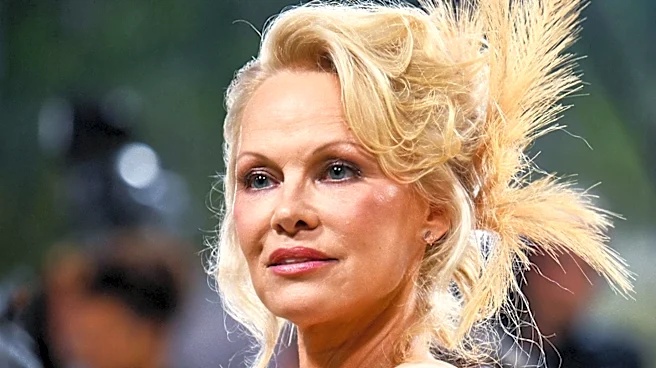
Pamela Anderson, the former Baywatch star, has been making public appearances without makeup since 2023. This decision has garnered significant media attention, with headlines describing her choice as 'bold,' 'brave,' and 'inspiring.' Anderson, now 59,
has stated that her move towards a makeup-free look is rooted in self-acceptance and a desire to challenge conventional beauty trends. She expressed to Vogue that she was doing it more for herself, questioning the extensive effort and time spent in a makeup chair. This shift in her public persona follows a period where her image often overshadowed her work, including the aftermath of a leaked intimate video. Anderson has also publicly discussed overcoming hepatitis C, a diagnosis from the early 2000s, for which she was cured in 2015. Her current approach to aging and public image reflects a conscious effort to rebuild her career on her own terms.
Why It's Important?
Pamela Anderson's decision to appear without makeup in public is significant as it directly challenges the pervasive beauty standards within Hollywood and the broader entertainment industry. In an era dominated by filters, cosmetic procedures, and the pressure to maintain a youthful appearance, her choice is seen as revolutionary. This move highlights the double standards women in the public eye face regarding aging, where both embracing cosmetic treatments and rejecting them often lead to scrutiny. Her stance encourages a conversation about self-acceptance and authenticity, potentially influencing public perception of beauty and aging. It also underscores the resilience of individuals in navigating public life and personal challenges, such as her battle with hepatitis C, while redefining their public image. This could empower other public figures and individuals to embrace their natural appearance, fostering a more inclusive and realistic view of beauty.
What's Next?
Pamela Anderson's continued public appearances without makeup are likely to further fuel discussions around beauty standards, aging, and self-acceptance in Hollywood and beyond. Her actions may inspire other celebrities to adopt similar approaches, potentially leading to a broader cultural shift in how aging and natural beauty are perceived. As she continues to promote her work, such as her acclaimed return in 'The Last Showgirl' and her acceptance of amfAR’s Award of Courage, her personal choices will remain intertwined with her professional narrative. The ongoing conversation will likely involve media outlets, beauty brands, and social commentators, all weighing in on the implications of her stance. This could lead to increased demand for more natural and less invasive beauty products and services, or conversely, a backlash from industries that profit from anti-aging narratives. Her journey will continue to be a case study in navigating fame and personal authenticity.
Beyond the Headlines
Beyond the immediate impact on beauty trends, Pamela Anderson's choice delves into deeper ethical and cultural dimensions concerning women's autonomy over their bodies and public image. Her 'barefaced rebellion' highlights the societal pressure on women, particularly in Hollywood, to conform to often unattainable beauty ideals. This situation contrasts sharply with the experience of male actors, who are rarely subjected to the same intense scrutiny regarding their aging process. Anderson's journey, including her past struggles with public image and health, adds layers to her current stance, transforming it from a mere aesthetic choice into a powerful statement about resilience, self-worth, and reclaiming one's narrative. It prompts a re-evaluation of what constitutes 'bravery' in the public eye, suggesting that authenticity in the face of societal expectations can be a profound act of defiance. This could contribute to a long-term shift in cultural values, prioritizing genuine self-expression over manufactured perfection.