




What's Happening?
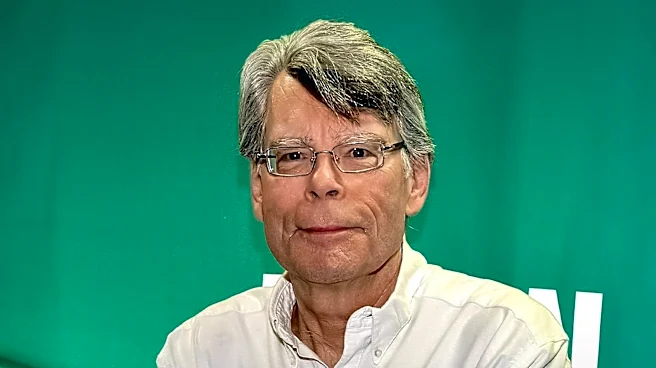
Ethan King, grandson of renowned author Stephen King, has joined the writing team for the second season of the prequel series 'It: Welcome to Derry'. Showrunner Brad Caleb Kane confirmed this development, emphasizing that King's involvement is based on his talent
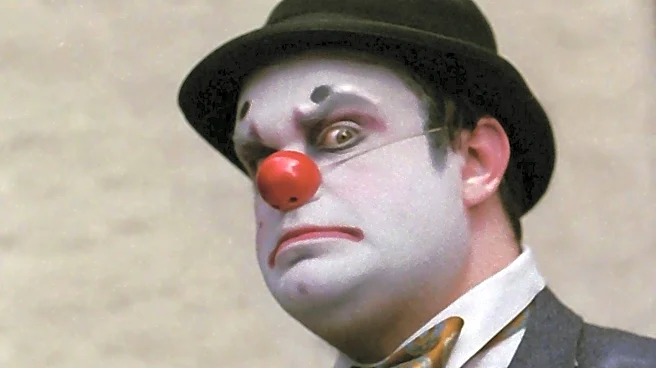
rather than nepotism, describing him as 'brilliant and really smart.' The series, which has already received praise from Stephen King himself for being 'amazing' and 'terrifying,' is set to delve further into the lore of Pennywise. The first season was set in 1962 during the Cold War, incorporating themes of paranoia and nuclear threat. Season 2 will transport viewers back another 27 years to 1935, during the Great Depression. This period will explore chilling elements of human nature amidst the social and cultural challenges of the era, including the historical Bradley Gang Massacre, which is part of Pennywise's cycle of terror as detailed in Stephen King's original novel. Bill Skarsgård is confirmed to return as Pennywise, with filming scheduled for summer 2027 and an anticipated release in 2028 on HBO and HBO Max.
Why It's Important?
The inclusion of Ethan King in the writing room for 'It: Welcome to Derry' Season 2 signifies a unique generational continuation of Stephen King's iconic horror universe. This move could bring a fresh yet inherently connected perspective to the narrative, potentially deepening the series' ties to the original source material and its thematic underpinnings. For fans of Stephen King's work, this collaboration offers an intriguing prospect of maintaining the integrity and spirit of the 'It' saga while evolving its storytelling. The decision to set the second season in 1935 during the Great Depression is significant, as it allows the series to explore a different facet of societal horror, intertwining Pennywise's malevolence with the real-world despair and desperation of that historical period. This setting provides a rich backdrop for examining how economic hardship and social unrest can amplify fear, offering a more complex and layered exploration of the horror genre beyond supernatural elements alone. The return of Bill Skarsgård as Pennywise also ensures continuity in the portrayal of the iconic villain, which is crucial for fan engagement and the series' overall success.
What's Next?
The immediate next steps for 'It: Welcome to Derry' Season 2 involve the ongoing writing process, with Ethan King contributing to the script. Following this, filming is slated to commence in the summer of 2027. This timeline suggests that production will be a significant undertaking, given the period setting and the complex nature of the story. Fans can anticipate further casting announcements and promotional material as the production progresses. The series is expected to premiere in 2028 on HBO and HBO Max, building anticipation among viewers who are eager to see how the prequel expands on the 'It' universe. The creative team will likely focus on meticulously recreating the 1935 setting and integrating historical events like the Bradley Gang Massacre into Pennywise's narrative. The success of this season could influence future adaptations of Stephen King's works, potentially encouraging more involvement from his family members in creative roles, thereby establishing a legacy within the horror genre.
Beyond the Headlines
Ethan King's involvement in 'It: Welcome to Derry' extends beyond a simple writing credit; it represents a fascinating intersection of legacy, adaptation, and creative evolution within a major media franchise. This move could set a precedent for how literary estates engage with adaptations of their foundational works, potentially fostering a deeper, more authentic connection to the original author's vision. Ethically, it raises questions about the balance between preserving an author's original intent and allowing new generations to interpret and expand upon established narratives. Legally, it highlights the ongoing value of intellectual property and the various ways creators and their heirs can maintain influence over their creations. Culturally, the series' exploration of the Great Depression alongside supernatural horror could offer profound commentary on societal anxieties and resilience, drawing parallels between historical hardships and contemporary fears. This approach could elevate the series beyond mere entertainment, transforming it into a vehicle for social commentary and historical reflection, thereby enriching the horror genre with deeper thematic resonance.