








What's Happening?
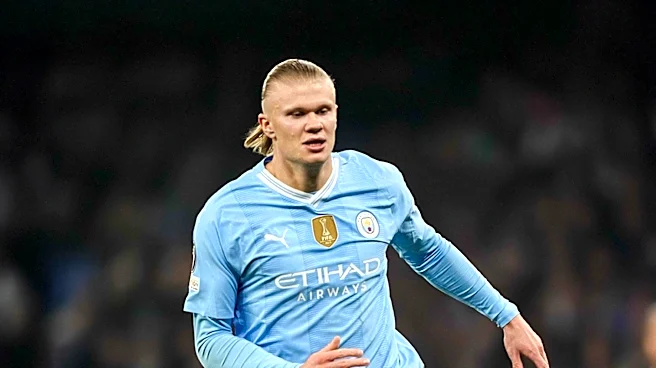
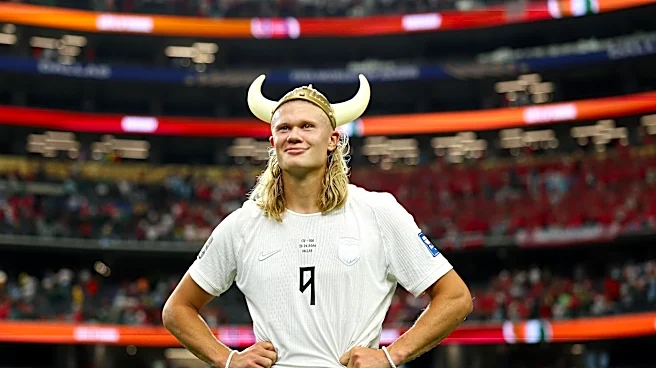
Erling Haaland, the Norwegian football star, has been making headlines not only for his impressive performance in the 2026 FIFA World Cup but also for his unconventional diet. Haaland's diet, which is heavy on organ meats and raw milk, is described as 'ancestral'
and is not typically recommended by modern dietitians. Despite its unusual nature, this diet seems to be contributing to his remarkable success on the field. Haaland has scored 62 goals in 54 games for Norway, including seven goals in four games during the current World Cup. His performance was pivotal in Norway's recent 2-1 victory over Brazil, where he scored both goals, propelling his team into the quarter-finals.
Why It's Important?
Haaland's dietary choices highlight a growing interest in personalized nutrition and its potential impact on athletic performance. As athletes seek to optimize their physical capabilities, unconventional diets like Haaland's may gain attention for their potential benefits. This trend could influence sports nutrition, encouraging more personalized approaches tailored to individual needs and preferences. Additionally, Haaland's success underscores the importance of exploring diverse nutritional strategies in sports, which could lead to broader acceptance and integration of alternative diets in athletic training programs.
What's Next?
As Haaland continues to perform at a high level, his diet may attract further scrutiny and interest from both sports professionals and the general public. Nutritionists and sports scientists might study his dietary regimen to understand its effects on performance and recovery. If Haaland maintains his success, it could lead to increased experimentation with similar diets among athletes seeking competitive advantages. Additionally, sports teams and organizations may consider incorporating personalized nutrition plans into their training programs to enhance player performance.
Beyond the Headlines
Haaland's dietary choices also raise questions about the balance between traditional nutritional guidelines and personalized approaches. While his diet may not align with conventional recommendations, its apparent success challenges the notion of a one-size-fits-all approach to nutrition. This development could spark discussions about the role of individual dietary preferences and genetic factors in shaping optimal nutrition plans. Furthermore, it highlights the potential for cultural and historical dietary practices to inform modern nutrition strategies, blending ancestral wisdom with contemporary science.