










What's Happening?
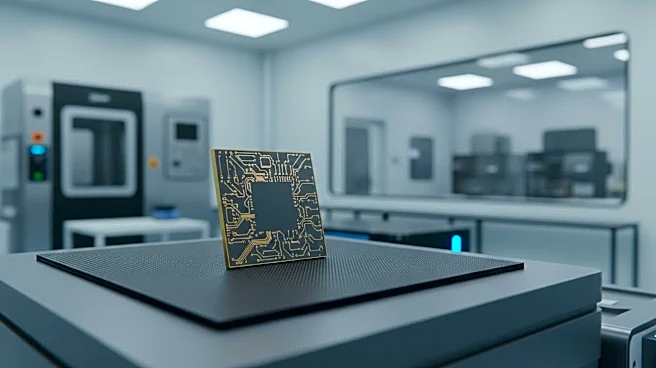
BAE Systems has announced that its Endura space microprocessor has successfully passed radiation tests, demonstrating its capability to operate in the challenging radiation environments encountered by national security spacecraft. This development marks
a significant milestone as military satellite programs increasingly demand more robust onboard computing solutions. The Endura system-on-chip (SoC) was tested to withstand both natural space radiation and the more intense strategic radiation conditions required for certain defense missions. The chip integrates multiple computing functions into a single device, enhancing the performance of satellites in space. Initially introduced in 2024, the Endura chip has been adopted for classified missions and is being evaluated for missile defense applications. It is manufactured using BAE Systems' radiation-hardened 45-nanometer technology at GlobalFoundries' secure facility in New York.
Why It's Important?
The successful radiation testing of the Endura microchip is crucial for advancing the capabilities of military satellites, which require reliable and powerful computing systems to operate effectively in space. This development could enhance the U.S. defense sector's ability to deploy more sophisticated satellite technologies, potentially improving national security and strategic defense operations. By integrating multiple functions into a single chip, the Endura SoC offers a more efficient and compact solution, which is increasingly important as space missions become more complex. The adoption of such advanced technology could also position BAE Systems as a leader in the space defense industry, potentially influencing future contracts and collaborations with government and military agencies.
What's Next?
BAE Systems is currently working with multiple prime contractors to demonstrate the Endura chip's suitability for missile defense strategic applications. The company is accepting orders for Software Development Units featuring the Endura SoC, indicating a move towards broader deployment and commercialization of this technology. As the demand for advanced space computing solutions grows, BAE Systems may continue to expand its product line, potentially introducing a family of next-generation space computing products anchored by the Endura chip. This could lead to further innovations in satellite technology and defense applications, with potential implications for U.S. military capabilities and strategic defense initiatives.