






What's Happening?
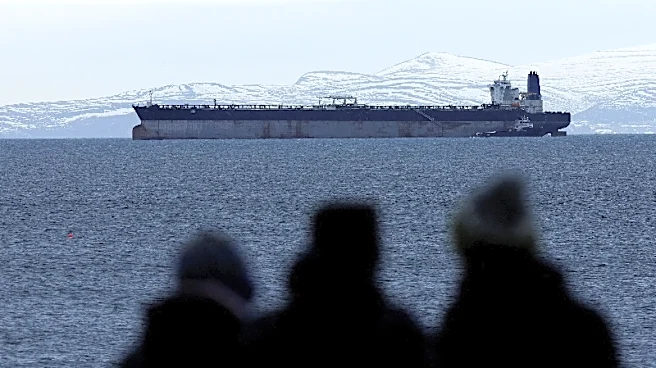
Goldman Sachs has increased its oil price outlook for 2027, citing ongoing shipping disruptions in the Middle East. Strategists, led by Daan Struyven, now project Brent crude at $85 per barrel and West Texas Intermediate (WTI) at $80 for December 2026,
followed by $80 and $75 respectively during 2027. This represents a $5 per barrel increase for both Brent and WTI. The bank noted that Brent spot futures have already reached $97, and oil options indicate a higher probability of prices exceeding $100 next year, with the options-implied probability of Brent trading above $100 in March 2027 rising to approximately 25% from about 6% a month prior. Despite incorporating these longer-lasting disruptions, Goldman Sachs described its adjustment to oil price estimates as modest, partly due to limited drawdown in OECD commercial inventories since the conflict began.
Why It's Important?
This revised outlook from a major financial institution like Goldman Sachs signals potential upward pressure on energy costs for U.S. consumers and businesses. Higher oil prices can lead to increased fuel costs, impacting transportation, manufacturing, and ultimately, consumer goods prices, potentially contributing to inflationary pressures. For U.S. industries heavily reliant on oil, such as airlines, logistics, and petrochemicals, this forecast suggests higher operational expenses. Conversely, domestic oil producers might see increased profitability. The emphasis on Middle East shipping risks highlights the geopolitical sensitivity of global energy markets and how regional instability can have far-reaching economic consequences for the U.S., influencing trade balances and strategic energy reserves. The bank's assessment of limited OECD inventory drawdowns also suggests a complex interplay of supply and demand factors beyond immediate geopolitical events.
What's Next?
Goldman Sachs indicates that the risks to its projections are "significantly tilted to the upside," especially in the near term. An upside scenario could see Brent crude exceeding $120 per barrel if average Gulf production in 2027 remains 4 million barrels per day below pre-war levels, compared to the 0.5 million barrels per day reduction in their base-case assumptions. The most likely trigger for this scenario, according to strategists, would be increased attacks on shipping through the Strait of Hormuz and the Red Sea. This suggests that continued geopolitical tensions and maritime security issues in the Middle East will be critical factors to watch, potentially leading to further price volatility and upward revisions. Businesses and policymakers in the U.S. will likely monitor these developments closely to anticipate and mitigate potential economic impacts.
Beyond the Headlines
The persistent focus on Middle East shipping risks underscores the fragility of global supply chains and the interconnectedness of energy markets with geopolitical stability. Beyond the immediate economic impact of higher oil prices, this situation could accelerate the push for energy independence and diversification in the U.S., potentially boosting investments in renewable energy sources and domestic oil production. It also highlights the strategic importance of maritime security and international efforts to safeguard critical shipping lanes. The long-term implications could include a re-evaluation of global energy strategies, with a greater emphasis on resilience and reducing reliance on volatile regions, potentially shifting trade patterns and fostering new alliances aimed at securing energy supplies.