







What's Happening?
New research from DP World's 2026 Chief Supply Chain Officer Pulse Report reveals a significant shift in corporate strategy, with 84% of supply chain executives now prioritizing resilience and optionality over cost reduction. The study, based on a survey
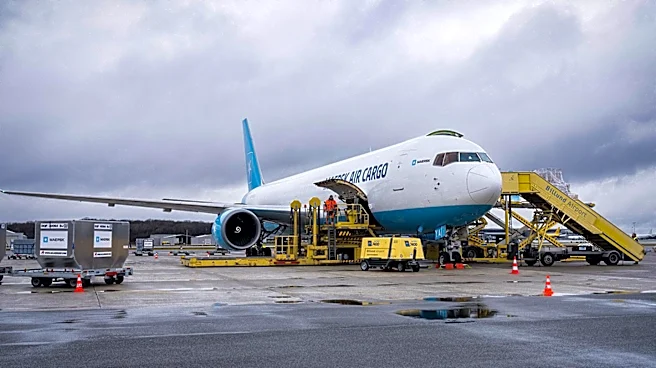
of 103 Chief Supply Chain Officers (CSCOs) across 14 markets and nine industries, indicates a structural change in how companies plan sourcing, production, inventory, and transport. Approximately 71% of CSCOs intend to diversify their supplier base within the next 12 months. This shift is driven by increasing global uncertainty, leading companies to seek alternative sourcing, multiple transport options, and greater flexibility in their networks. The report also highlights that 86% of respondents view access to alternative and multimodal trade routes as a growing competitive advantage, moving away from solely optimizing for the cheapest available option.
Why It's Important?
This strategic reorientation has profound implications for U.S. industries and the national economy. The prioritization of resilience means that U.S. businesses will likely invest more in diversifying their supply chains, potentially leading to increased domestic manufacturing and sourcing, or closer-to-shore production. This could create new jobs and strengthen local economies, but it may also result in higher production costs initially. For consumers, this could mean more stable product availability but potentially higher prices. The emphasis on multimodal transport and alternative routes will drive investment in diverse logistics infrastructure, benefiting ports, rail networks, and freight forwarders. Companies that adapt quickly to this new paradigm by building flexible and diversified supply chains will gain a competitive edge, while those that remain focused solely on cost reduction may face greater vulnerability to disruptions and market volatility.
What's Next?
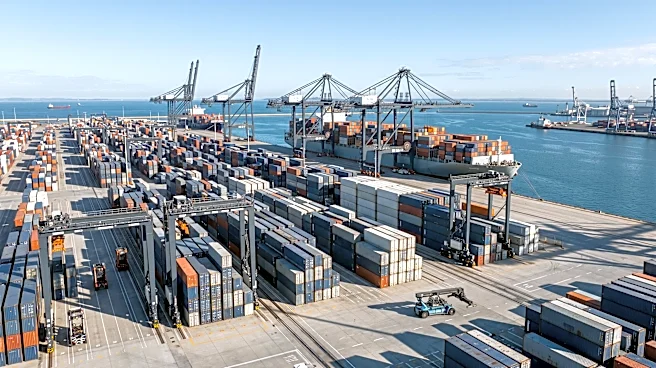
The findings suggest that companies will continue to invest in creating more choices regarding sourcing, goods movement, and customer reach. This will likely lead to more complex cargo flows as businesses spread production and sourcing across multiple locations. Logistics providers will need to offer more than single-route solutions, emphasizing flexibility and the ability to switch cargo between different modes and gateways. For the breakbulk and project cargo sectors, this means building alternative routing options into project planning well in advance, identifying suitable ports, terminals, and handling equipment. Digital integration, supply chain visibility, and lower-carbon logistics are also expected to become increasingly crucial capabilities. This trend will elevate the role of supply chain executives within corporate decision-making, as their strategies directly impact business growth, market entry, and corporate risk management.
Beyond the Headlines
The shift from optimization to optionality in supply chain management reflects a deeper recognition of the inherent unpredictability of the global environment. This change is not merely operational but philosophical, challenging the long-held business principle of maximizing efficiency at all costs. It implies a greater acceptance of redundancy and strategic overcapacity as necessary investments for long-term stability. Ethically, this could lead to more responsible sourcing practices and a greater focus on labor conditions and environmental impact across diversified supply chains. Culturally, it may foster a more collaborative approach among supply chain partners, as shared risk and mutual resilience become paramount. This evolution could also spur significant technological advancements in real-time data analytics, AI-driven risk assessment, and autonomous logistics systems to manage the increased complexity of diversified networks.