
What's Happening?
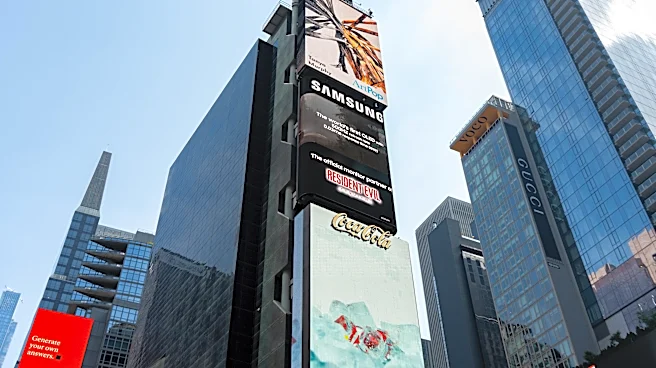
Gucci has launched a prominent advertising campaign in Downtown Manhattan, utilizing a large-format billboard to showcase its latest fashion creative. The billboard, placed by SEEN, features a single striking
portrait of a model in oversized black sunglasses and a dark leather look, with the Gucci name displayed in large white lettering. This minimal composition aims to convey luxury, attitude, and brand recognition without the need for extensive promotional copy or product descriptions. The campaign is strategically located in Downtown Manhattan, an area known for its association with fashion, art, retail, and cultural discovery, allowing the billboard to integrate into the neighborhood's visual language and create a strong visual interruption within the urban environment. The execution emphasizes image, styling, and scale to communicate the brand's message effectively.
Why It's Important?
This campaign highlights a strategic approach by luxury brands to leverage out-of-home advertising as a powerful tool for brand identity and presence in key urban markets. By opting for a minimalist design with a commanding visual, Gucci reinforces its premium image and relies on visual language rather than explicit messaging. This method is particularly effective in high-traffic areas like Downtown Manhattan, where audiences have limited time to process information. For the fashion industry, it demonstrates how large-scale outdoor media can transform editorial photography into an urban landmark, creating a cinematic experience for viewers. This approach can influence how other luxury and lifestyle brands consider their advertising strategies, emphasizing visual impact and environmental integration to build brand recognition and desirability.
What's Next?
The success of Gucci's minimalist, high-impact billboard in Downtown Manhattan may encourage other luxury fashion brands to adopt similar strategies in major U.S. cities. This could lead to an increased demand for premium outdoor advertising spaces that allow for large-scale visual presentations. Advertising firms specializing in out-of-home media may see a rise in requests for campaigns that prioritize strong imagery and minimal text, aiming to create a sophisticated and confident brand presence. This trend could also influence urban aesthetics, with more large-format art-like advertisements becoming part of cityscapes, particularly in fashion-centric districts. Brands will likely continue to experiment with how physical environments can enhance their campaign messaging and overall brand experience.
Beyond the Headlines
This campaign touches upon the evolving role of advertising in an increasingly visually saturated world. By eschewing traditional promotional text, Gucci is banking on the power of iconography and brand recognition to communicate its message. This reflects a broader cultural shift where visual storytelling and brand perception often outweigh explicit product details, especially in the luxury sector. Ethically, it raises questions about the impact of large-scale commercial imagery on public spaces and urban landscapes, transforming them into extensions of brand narratives. Legally, such prominent displays must adhere to local advertising regulations, but their artistic nature might push boundaries. Culturally, these billboards become part of the urban fabric, influencing perceptions of style, luxury, and aspiration within the city's daily life, potentially setting new benchmarks for how brands engage with their audience in public spheres.